House Repipe Garland TX — Fast Pipe Repair, Replacement & 24/7 Help
North Texas pipe repiping solutions for leaks, low water pressure, rusty water, and aging water lines.
When you need pipe repiping Garland TX homeowners can turn to for a clear repair-or-replace assessment, Center Garland Plumbing helps you understand what is actually happening inside your water lines. Rust-colored water, declining water pressure, repeated pinhole leaks, wet flooring, a suspected slab leak, or old galvanized pipes do not automatically mean you need a full repipe—but they do deserve a professional evaluation.
Our team serves Garland homeowners, landlords, property managers, and commercial properties with pipe repair, water-line replacement, leak evaluation, rerouting, and whole-house repiping planning. We explain the pipe material, likely source of the problem, available repair options, potential disruption, and next steps before major work begins.
- Pipe repair, water-line replacement, and whole-house repiping evaluations
- Help for weak water pressure, discolored water, recurring leaks, and aging pipes
- Residential, rental, HOA, multifamily, and commercial plumbing support
- 24/7 emergency availability for active leaks, burst pipes, and urgent water damage concerns
Call +1 (945) 387-1123 for urgent pipe leaks, water-line problems, and Garland repiping evaluations.
Request Pipe Repiping Service
Fill out the form and a licensed Garland plumber will contact you immediately!
Pipe Repiping in Garland, TX with a Clear Repair-or-Replace Plan
Garland pipe repiping service for homeowners and commercial property managers who need straight answers.
Pipe replacement is a major decision. A homeowner may be tired of chasing one leak after another, while a property manager may need to protect tenants, units, and daily operations. Center Garland Plumbing approaches each plumbing repipe in Garland by first identifying the pipe material, location of the issue, access conditions, leak history, fixture performance, and the practical difference between a local repair and a larger replacement project.
Rather than assuming every older pipe system needs replacement, we help determine whether a targeted repair, partial repipe, reroute, or whole-home pipe replacement best fits the condition of the property.
Serving Garland, Dallas County, and nearby North Texas communities
Support for pipe repair, leak detection, slab-leak concerns, water-line replacement, and broader plumbing needs
Residential and commercial plumbing capabilities for single-family homes, rentals, multifamily properties, and business locations
Around-the-clock emergency response for active water leaks and urgent plumbing problems
Clear scopes of work, project-specific recommendations, and practical next-step guidance
Pipe Replacement Near Garland Neighborhoods, Business Areas & Landmarks
North Texas pipe repiping support near Historic Downtown Garland, Firewheel, Duck Creek, and surrounding communities.
Center Garland Plumbing serves homes and properties across Garland, from established neighborhoods near Historic Downtown Garland and Travis College Hill to residential areas around Duck Creek, Club Hill, Eastern Hills, Monica Park, Centerville, Embree, and Firewheel. Different homes can have very different plumbing histories, including original lines, later repairs, mixed pipe materials, under-slab lines, attic runs, or previous fixture upgrades.
If your property is near Downtown Garland Square, Firewheel Town Center, Lake Ray Hubbard, Duck Creek Park, Spring Creek Forest Preserve, or one of Garland's established residential neighborhoods, we can help evaluate low water pressure, rust-colored water, repeat leaks, and water-line replacement needs.
Garland Neighborhoods
Buckingham North, Duck Creek, Centerville, Club Hill, Eastern Hills, Embree, Firewheel, Monica Park, Northeast Garland, Northwest Garland, South Garland, Golden Meadows, Glenbrook Meadows, Ridgewood Park, and Valley Creek
Nearby Cities
Rowlett, Sachse, Richardson, Murphy, Wylie, Plano, Sunnyvale, Mesquite, Rockwall, Heath, Dallas, Allen, and surrounding DFW communities
Local Hubs & Destinations
Historic Downtown Garland, Downtown Garland Square, Firewheel Town Center, Garland Landmark Museum, Plaza Theatre, Granville Arts Center, Curtis Culwell Center, Lake Ray Hubbard, and Duck Creek Golf Club
Specialized Pipe Repiping for Garland Water Lines, Supply Lines & Slab-Routed Plumbing
Garland, TX pipe replacement specialists for aging copper, galvanized pipes, CPVC, PEX, and mixed-material systems.
A leaking pipe is not always just a simple repair. Your home's water lines supply sinks, showers, toilets, appliances, hose connections, and water-heater connections. When those lines are corroded, restricted, repeatedly leaking, or difficult to access beneath a slab, a plumber must understand the system as a whole—not merely patch the nearest visible symptom.
Center Garland Plumbing evaluates pipe material, pressure symptoms, leak locations, routing options, fixture connections, and access conditions before recommending work. Whether you need a small water-line repair or are considering a whole-house repipe in Garland, the objective is to provide a practical solution with a clear scope.
What Happens When Old or Damaged Pipes Fail in Garland?
Low pressure, rusty water, recurring leaks, and slab-line symptoms can point to an underlying water-line problem.
Many people search for a plumber because something suddenly feels wrong: the shower pressure drops, water looks brown or rusty, a ceiling stain appears, the water bill rises, or a repaired pipe leaks again somewhere else. These symptoms can come from different causes, so a full repipe should never be recommended on guesswork alone.
In older Garland homes, potential causes can include corrosion inside galvanized pipe, aging copper, mineral buildup, failing fittings, water-heater sediment, damaged supply lines, or plumbing routed beneath a slab. Garland Utilities describes local water as hard and notes that reddish-brown water may be associated with corrosion in distribution pipes, home plumbing, or water-heater components.
Common Warning Signs
Prevent Repeat Leaks with Proactive Pipe Inspections and Water-Line Maintenance
Garland homeowners can use a pipe inspection to determine whether repair, rerouting, or repiping is the practical next step.
Unlike a backflow assembly or other device that may require scheduled certification, a home does not typically need annual whole-house repiping service. However, recurring leaks, corrosion, older pipe materials, declining pressure, and repeated patchwork repairs are good reasons to schedule a professional pipe-system evaluation before another failure causes more damage.
Center Garland Plumbing can inspect visible plumbing, review your leak history, assess fixture flow, identify accessible pipe materials, discuss suspected slab-line issues, and help you determine whether localized repair, preventive replacement, or broader repiping should be considered.
| Task | Description | Typical Timing | Practical Value |
|---|---|---|---|
| Visual pipe inspection | Check accessible pipes, fittings, shutoffs, and water-heater connections for visible leaks or corrosion | When symptoms appear or during plumbing maintenance | Helps identify obvious concerns |
| Pressure and flow assessment | Evaluate low-pressure complaints and fixture performance | When pressure changes or multiple fixtures are affected | Helps separate localized problems from wider system concerns |
| Leak investigation | Review meter behavior, moisture signs, leak locations, and suspected hidden leaks | When water loss or damage is suspected | Supports informed repair planning |
| Pipe-material review | Identify accessible galvanized, copper, CPVC, PEX, or mixed piping | Before replacement decisions | Helps determine realistic repair and replacement options |
| Repair-versus-replace recommendation | Compare targeted repair, partial repipe, reroute, and whole-home options | After inspection | Helps avoid unnecessary work or repeat emergency repairs |
Planning Guidance
Frequency note: A pipe inspection is most useful when a homeowner is experiencing symptoms, planning a renovation, or dealing with a history of leaks. The right timing depends on the age and material of the plumbing, the property's condition, and prior repair history.
Cost note: The cost of an inspection, repair, partial repipe, reroute, or whole-house replacement depends on the home layout, pipe material, number of fixtures, access, damage, and the scope of work. Center Garland Plumbing can provide project-specific information after evaluating the property.
Who Needs Pipe Repiping or Water-Line Replacement in Garland?
From older single-family homes to multifamily properties and commercial facilities across North Texas.
Pipe problems affect more than one type of property. A homeowner may be dealing with original galvanized lines, a landlord may be responding to repeat tenant maintenance calls, and a facility manager may need a coordinated commercial plumbing plan that limits disruption.
Center Garland Plumbing provides pipe repair and repiping support for properties where water lines are leaking, corroded, outdated, undersized, difficult to access, or repeatedly failing.
How Garland Water, Weather, Age & Usage Can Affect Pipe Lifespan
North Texas plumbing systems face hard water, temperature shifts, aging materials, and daily demand.
Garland homes can have plumbing systems installed across different decades, using different materials and repair methods. Older homes may have original galvanized or copper water lines, later additions, mixed materials, or previous repairs that changed portions of the system. Garland's established neighborhoods and older housing make a careful inspection especially important before assuming every water-pressure or discoloration issue has the same cause.
Garland reports hard water, with hardness averaging 161 mg/L or approximately 7.0 to 10.5 grains per gallon. Mineral content can contribute to scale at aerators, showerheads, fixtures, and water-heater components. It does not automatically cause every pipe leak, but mineral buildup, corrosion, and aging pipe materials can all influence plumbing performance over time. Consider a water softener or water filtration system to help manage mineral content.
Summer
Higher household use, irrigation demand, and water-heater workload can make weak pressure, restricted fixtures, and existing leaks more noticeable.
Winter
North Texas cold snaps can stress exposed pipes, outdoor plumbing, attic lines, and vulnerable areas without proper protection.
Spring & Fall
Temperature shifts, seasonal irrigation changes, and renewed household water use can reveal existing weak points.
Older Home Systems
Long-term corrosion, scale, prior repairs, mixed pipe materials, and aging fittings may contribute to inconsistent performance.
Slab-Foundation Homes
A hidden water leak beneath or near the foundation can require careful investigation before deciding between direct repair, rerouting, or a broader repipe. Learn more about our slab leak detection services.
Common Water-Line Materials Found in Garland Homes and Properties
Understanding galvanized pipe, copper, CPVC, PEX, and mixed plumbing systems helps guide the right repair.
Different pipe materials have different strengths, limitations, ages, and repair considerations. A professional inspection helps identify what is accessible, what may be hidden behind walls or below a slab, and whether a repair can reasonably address the issue.
| Pipe Material or Configuration | Often Found In | Common Concerns | Repiping Considerations |
|---|---|---|---|
| Galvanized steel pipe | Older homes and older plumbing systems | Internal corrosion, rust-colored water, restricted flow, aging threads | Replacement may be considered when corrosion or pressure loss is widespread |
| Copper pipe | Many homes built or updated over several decades | Pinhole leaks, corrosion, inaccessible lines, repeated leak history | An isolated leak may be repairable; recurring failures may justify broader evaluation |
| CPVC pipe | Some residential plumbing systems | Brittleness, cracking, aging fittings, heat-related wear | Material condition, access, and leak history help determine the right scope |
| PEX water lines | Many newer installations and repiping projects | Routing, fitting method, accessibility, and project-specific installation needs | Flexible routing can be useful for repiping projects where appropriate |
| Mixed-material plumbing | Homes with additions, renovations, or past repairs | Multiple ages, different fittings, inconsistent condition | A system review helps prioritize the sections that need attention |
| Under-slab water lines | Many slab-foundation homes | Hidden leaks, access difficulty, water damage, rerouting decisions | Direct repair, alternate routing, or overhead repiping may be compared |
Reliability note: No pipe material is automatically right for every Garland property. The best choice depends on the existing system, access, number of fixtures, routing, local code requirements, project budget, and the homeowner's long-term goals.
Our 6-Step Pipe Repiping Process in Garland, TX
Know what to expect before, during, and after pipe repair or water-line replacement.
Initial Call & Problem Review
We discuss your symptoms, such as rusty water, low pressure, repeat leaks, a suspected slab leak, wet flooring, or a burst pipe. We also ask about the age of the home, prior repairs, and active water damage concerns.
On-Site Assessment & Pipe Evaluation
A plumber evaluates accessible pipes, fixtures, water flow, leak indicators, visible corrosion, and potential routing options. If a hidden leak is suspected, we may recommend appropriate leak-detection steps.
Repair, Partial Repipe, or Whole-Home Repipe Options
We explain whether the available findings support an isolated repair, a targeted replacement, a plumbing reroute, or a more comprehensive repiping plan.
Written Scope & Access Planning
Before major work begins, the scope should clarify the planned material, affected areas, expected access points, fixture connections, water shutoff expectations, and any project-specific permit or inspection considerations.
Installation, Replacement & Pressure Testing
The team completes approved repair or replacement work, installs water lines according to the scope, reconnects applicable fixtures including faucets and sinks, and performs appropriate testing before the system is returned to service.
Walkthrough, Next Steps & Documentation
We review completed plumbing work, explain relevant shutoffs and recommendations, provide project documentation, and discuss any restoration, follow-up, or maintenance considerations.
What's Included in Our Garland Pipe Repiping and Replacement Service?
Clear deliverables for homeowners, landlords, property managers, and commercial clients.
Every property is different, so the final scope of a pipe repiping project depends on the findings, layout, pipe materials, number of fixtures, and access conditions. Center Garland Plumbing aims to provide a clear written explanation of the planned work so you understand what is included before the project begins.
Project Scope May Include
Key Advantages of Working with Center Garland Plumbing
Practical plumbing support, clear communication, and project-focused solutions for Garland properties.
Pipe repiping can feel disruptive because it involves the plumbing hidden behind walls, ceilings, floors, and fixtures. The goal is to make the decision and process clearer—not more complicated. Center Garland Plumbing supports pipe repair and replacement projects with an emphasis on diagnosis, scope clarity, and coordinated plumbing work.
Pipe repair, leak evaluation, water-line replacement, and whole-house repiping support
Residential plumbing and commercial plumbing capabilities for a wide range of property types
Help comparing targeted repair, partial replacement, rerouting, and full repiping
Support for active leaks, burst-pipe concerns, and emergency water-line problems
Clear communication about access points, expected water shutoffs, scope boundaries, and next steps
Contextual coordination with related plumbing needs such as water-leak detection, slab-leak evaluation, water heaters, fixtures, and water-damage concerns
Pipe Repair and Repiping Transformations for Garland Properties
What can change after failing water lines are properly evaluated, repaired, rerouted, or replaced?
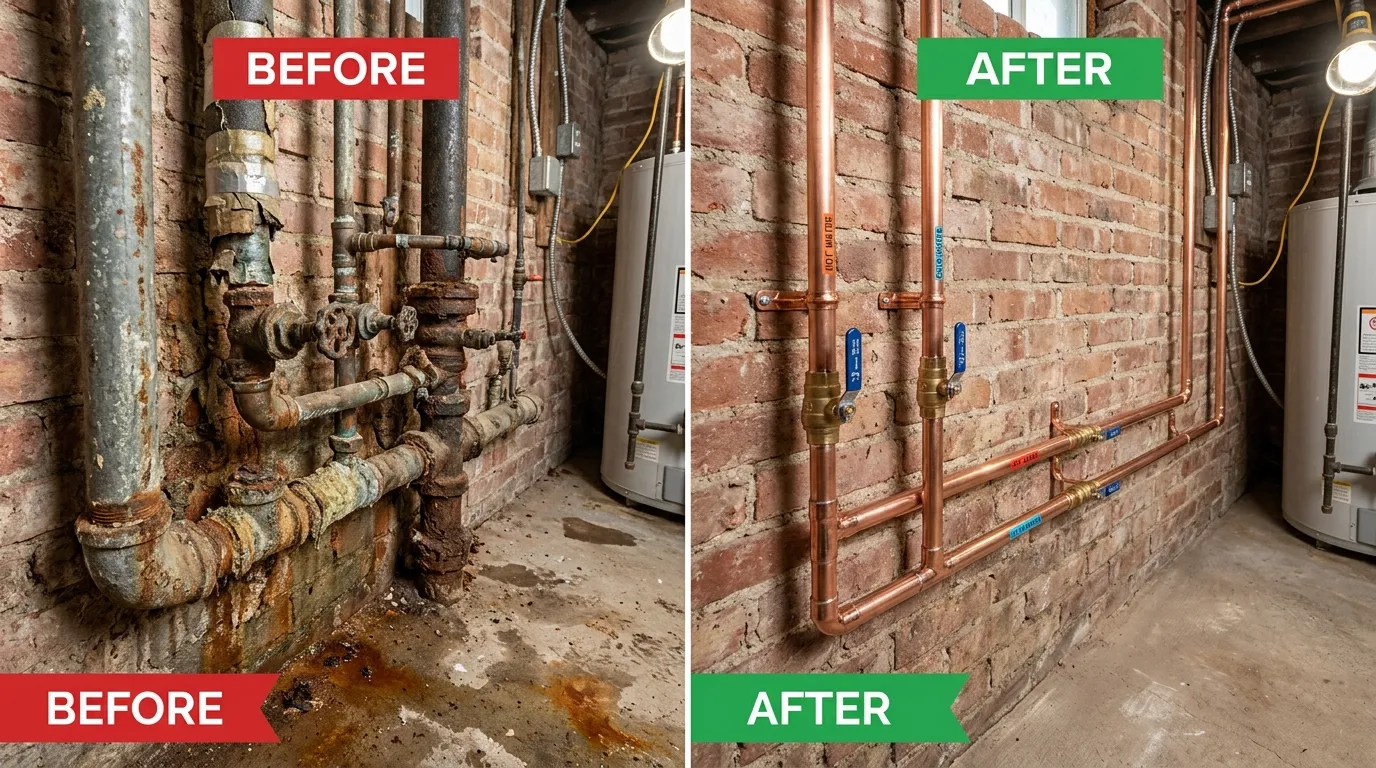
Many Garland homeowners contact a plumber after the same pattern repeats: one pipe is repaired, then another leak appears; water pressure weakens; water becomes discolored; or a slab-line concern creates uncertainty about what will happen to the floor. A professional assessment can replace uncertainty with a documented plan tailored to the actual condition of the home.
Unknown pipe material, repeated repairs, or uncertainty about where a leak is coming from.
A clearer assessment of the pipe system, likely problem areas, and practical repair or replacement options.
Water pressure issues, rusty water, or signs of corrosion affecting daily use.
A targeted solution designed to address the identified source rather than guessing at the cause.
Concern about tearing up flooring after a suspected slab leak.
A discussion of direct repair, alternate routing, or overhead repiping options based on inspection findings.
No clear understanding of scope, water shutoff periods, access points, or restoration needs.
A written project plan that explains what work is included and what to expect.
PEX vs. Copper for a Garland Home Repipe: Which Is Right for Your Property?
Garland pipe repiping options should be based on your existing plumbing, layout, access, and long-term goals.
One of the most common questions homeowners ask is whether PEX or copper is better for a whole-house repipe. There is no universal answer. The right pipe material and installation method depend on the home's existing plumbing, water-line routing, access, fixture count, budget, code requirements, and the condition of the original pipes.
PEX is often considered for its flexibility and potential routing advantages. Copper remains a familiar and durable option in many plumbing systems. CPVC, galvanized steel, and mixed systems may also affect how a repiping project is approached. A plumber should explain the reasons behind the recommended material rather than treating one product as automatically superior.
Material Decision Guidance
Should You Fix a Failing Pipe or Repipe Your Garland Home?
A clear comparison helps you decide whether a local repair or larger replacement is the smarter long-term move.
Not every leak requires a full repipe. A single accessible pipe failure in an otherwise sound plumbing system may be repaired effectively. But when leaks recur, corrosion is widespread, pressure is declining throughout the property, or an aging pipe system keeps generating new problems, a planned repipe can become more practical than repeated emergency service calls.
| Scenario | Repair May Be Appropriate | Repiping or Replacement May Be Appropriate |
|---|---|---|
| One accessible leak with otherwise sound plumbing | Yes, especially when the pipe system is in good overall condition | Usually not necessary solely because of one isolated leak |
| Minor fitting, valve, or short branch-line issue | Yes, a focused repair may resolve the problem | Consider broader work if similar failures are recurring |
| Repeated leaks in multiple locations | Short-term repair may stop the current leak | A partial or whole-home repipe may be worth evaluating |
| Old galvanized lines with rusty water and low flow | A limited repair may be possible in select situations | Wider replacement may be more practical if corrosion is extensive |
| Pinhole leaks in aging copper | A repair may address the immediate failure | Repeat pinhole leaks may indicate a larger decision is needed |
| Suspected under-slab water-line failure | Direct repair may be possible depending on location and access | Rerouting or an overhead repipe may reduce future slab access needs |
| Major remodel or fixture upgrade | Repair may be possible for limited scope | Planned replacement may be efficient while walls or finishes are already open |
When Replacement May Be the Better Choice
What Affects the Cost of Whole-House Repiping in Garland, TX?
Transparent cost drivers help you compare estimates with confidence.
A whole-house repipe is not priced by one flat number because every property has a different layout, pipe material, number of fixtures, routing challenge, and access condition. A trustworthy estimate should explain the scope of water-line work, what is included, where access may be needed, and who is responsible for restoration after plumbing access.
Main Cost Drivers
| Service Type | Typical Scope Considerations |
|---|---|
| Pipe leak repair | Leak location, pipe material, access, water damage, and required fittings |
| Partial pipe replacement | Number of affected lines, fixture branches, routing, and restoration needs |
| Slab-line reroute evaluation | Leak location, access, alternate routing options, and water-line condition |
| Whole-house repipe | Home layout, fixture count, hot/cold lines, material choice, access, and restoration scope |
| Commercial pipe replacement | Building size, tenant coordination, shutoff planning, system complexity, and operating schedule |
Note: Center Garland Plumbing can provide a project-specific estimate after evaluating the property. Avoid accepting an estimate that does not clearly explain materials, affected fixtures, access expectations, testing, permit responsibilities when applicable, and restoration inclusions or exclusions.
Which Garland Homes May Need Pipe Repair, Rerouting, or a Whole-House Repipe?
If your water lines keep creating problems, an inspection can help identify the right scope.
You may not need a full repipe after one small leak. However, there are situations where the condition, age, material, or leak history of the system makes a wider pipe replacement discussion reasonable. The goal is to determine whether continued repairs remain practical or whether a planned solution may reduce future disruptions.
Commercial Pipe Replacement for Garland Businesses & Multi-Unit Properties
Protect water service, manage downtime, and plan pipe work around your property's operational needs.
Commercial plumbing systems can involve more fixtures, longer pipe runs, multiple tenant spaces, shared water lines, equipment connections, and stricter access coordination than a single-family home. Center Garland Plumbing supports commercial pipe repair and replacement planning for businesses, property managers, landlords, HOAs, and multifamily properties in Garland and nearby North Texas communities.
Whether the issue is a recurring water-line leak, aging supply piping, inadequate flow, corrosion, tenant complaints, or a project tied to renovation work, the scope should account for access, scheduling, shutoff planning, safety, documentation, and restoration needs.
| Commercial Service | Description |
|---|---|
| Commercial pipe inspection | Evaluate visible supply lines, leak history, material condition, and potential replacement needs |
| Water-line repairs | Address active leaks, damaged fittings, and affected pipe sections |
| Partial commercial repiping | Replace defined branches, tenant areas, fixtures, or problem zones |
| Full pipe replacement planning | Develop a phased scope for broader aging or failing water-line systems |
| Multifamily plumbing coordination | Plan access, water shutdowns, resident communication, and unit-by-unit work where applicable |
Commercial Properties We Support
Why Commercial Clients Need a Clear Repiping Plan
Benefits of Hiring a Licensed Pipe Repiping Professional in Garland
Better information, safer installation practices, and a plan built around your property.
Water-line repair and replacement affect the plumbing that supplies daily life throughout your home or business. A professional evaluation helps identify whether a problem is isolated, whether a pipe material is deteriorating, and what scope of work is reasonable before walls, ceilings, floors, or fixtures are affected.
Clear Diagnosis
Identify the likely source of low pressure, leaks, corrosion, or discolored water before choosing a solution.
Options Comparison
Compare targeted repair, partial replacement, rerouting, and whole-house repiping options.
Fewer Emergencies
Reduce the cycle of repeated emergency calls when pipes are failing in multiple locations.
Proper Materials
Use plumbing materials and installation methods appropriate to the project scope.
Pressure Testing
Pressure-test and check affected work before returning plumbing to service.
Written Documentation
Receive a clearer written explanation of the work, affected areas, and next steps.
Coordinated Services
Coordinate related needs such as leak detection, slab-leak evaluation, fixture repair, water-heater work, or water-damage response.
Long-Term Planning
Support long-term planning for remodels, rental properties, multifamily buildings, and commercial locations.
Why DIY or Unlicensed Water-Line Replacement Can Create Bigger Problems
Pipe work should be planned, installed, and tested by qualified plumbing professionals.
Replacing water lines is not the same as changing a faucet supply hose. Improper pipe sizing, poor connections, unsupported lines, inaccessible shutoffs, incorrect materials, or incomplete testing can create leaks behind walls, damage finishes, reduce fixture performance, or cause avoidable water damage.
A hidden leak may not be obvious until drywall, flooring, cabinets, insulation, or structural areas have already been affected. If you have an active leak, shut off water at the appropriate valve if it is safe to do so and contact a plumbing professional for guidance.
Safety Points
Answers to Common Pipe Repiping Questions in Garland, TX
Quick answers for homeowners and property managers deciding between pipe repair and replacement.
How do I know whether I need pipe repair or a whole-house repipe?
One leak does not automatically mean you need a full repipe. A plumber should consider the pipe material, age, leak history, location of failures, water-pressure symptoms, accessibility, and the cost of repeated repairs. If failures are isolated, a repair may be enough. If leaks are recurring or widespread, broader replacement may be worth evaluating.
Why is my water pressure low throughout the house?
Whole-home pressure problems can have several causes, including restricted galvanized pipe, mineral buildup at fixtures, a valve issue, a supply problem, or other plumbing conditions. If low pressure affects multiple fixtures, a professional evaluation can help identify whether the problem is local or system-wide.
Why is my water brown, yellow, rusty, or metallic-tasting?
Discolored water can come from several sources. Garland notes that reddish-brown water may be associated with corrosion in pipes, home plumbing, or water-heater components. If the issue appears at one fixture, only with hot water, or throughout the property, those details can help identify the likely source.
Do older Garland homes have galvanized water lines?
Some older homes may have galvanized steel pipe, copper, cast-iron drain lines, later mixed-material repairs, or upgraded sections. The only way to know what is present is to inspect accessible plumbing and review the home's history where available.
Can you repipe a house without tearing up the slab?
Sometimes. If a water line under the slab is leaking or repeatedly failing, a plumber may compare direct repair with alternate routing, such as an overhead repipe or attic reroute. The best option depends on the leak location, pipe condition, access, layout, and overall system history. Learn more about our slab leak detection services.
Can I stay in my house during a repipe?
Many homeowners can remain in the home during at least part of a repiping project, but this depends on the scope, water shutdown periods, access locations, household needs, and restoration work. Ask for a project-specific schedule before work begins.
How long will water be off during pipe replacement?
Water interruption varies by the size and complexity of the job. A clear scope should explain anticipated shutoff periods and how the plumbing team plans to restore service in stages when possible.
Will a repipe require drywall access?
It can. New water lines often need access through walls, ceilings, cabinets, attic areas, or other spaces. The required access depends on the home's layout and routing plan. A quality estimate should explain expected access points and clarify restoration responsibilities.
Is PEX or copper better for a Garland house repipe?
The best material depends on the property, system design, routing, plumbing code requirements, budget, accessibility, and homeowner preferences. PEX and copper each have different characteristics. A plumber should explain why a specific material is recommended for your project.
Can I repipe only one bathroom or one section of my home?
Yes, partial repiping can be appropriate when the problem is limited to a defined area and the remaining plumbing is in good condition. If many areas are aging or leaking, a broader repipe may offer a more practical long-term solution. This can be useful during a bathroom remodeling project.
Does repiping fix drain backups?
Not necessarily. Repiping usually refers to replacing water supply lines. Drain backups may involve drain pipes, sewer lines, roots, clogs, or damaged waste piping. A sewer camera inspection or drain evaluation may be more appropriate for recurring drainage problems.
Do I need a permit for pipe repiping in Garland?
Permit requirements can depend on the scope and location of the work. Garland advises residents to contact Building Inspection if they are unsure whether a project requires permits. A plumbing professional can discuss permit and inspection considerations for the proposed job.
Does homeowners insurance cover a whole-house repipe?
Coverage depends on your individual policy, the cause of damage, exclusions, maintenance history, and the insurer's determination. A plumbing company can provide available documentation of observed damage and completed work, but it cannot guarantee insurance coverage or claim approval.
What should a repiping estimate include?
Ask for clarity on pipe material, the water lines and fixtures included, access points, water shutoff expectations, pressure testing, permit considerations, restoration responsibility, exclusions, payment terms, and any applicable workmanship or manufacturer warranty terms.
Get a Pipe Repair or Repiping Recommendation You Can Understand
Clear scope, practical options, and support for the plumbing issue you are facing.
Center Garland Plumbing is here to help when you are unsure whether your Garland property needs a small repair, a partial water-line replacement, an alternate route around a slab issue, or a whole-house repipe. We focus on explaining the condition of the accessible plumbing, the likely cause of the problem, and the options available for moving forward.
Before approving major pipe work, homeowners and property managers should understand the planned material, affected fixtures, access points, expected shutoff periods, testing process, permit needs when applicable, and restoration responsibilities.
If a pipe leak, low-pressure concern, or suspected slab-line problem is disrupting your property, start with a professional assessment rather than assuming the solution. The right scope should be based on the system's actual condition and your long-term needs.
217 N 10th St
Garland, TX 75040
United States
Credentials That Matter for Pipe Repair and Water-Line Replacement
Ask for the licensing and project documentation relevant to your Garland plumbing work.
Pipe repiping, water-line replacement, leak repair, fixture connections, and related plumbing work should be performed by appropriately qualified professionals. Before beginning a major project, property owners should confirm the plumbing professional's relevant credentials, insurance coverage, and any permit or inspection requirements applicable to the scope.
Center Garland Plumbing can discuss the qualifications, documentation, and project responsibilities that apply to your requested service.
Relevant Texas plumbing license status for the professional performing the work
Master plumber oversight or project responsibility where required
Appropriate workers' compensation, liability, and vehicle coverage information when requested
Permit coordination and inspection planning where required for the work
Written scope identifying material, affected plumbing, access needs, and testing expectations
Project-specific workmanship and manufacturer warranty information provided in writing when applicable
Emergency Pipe Repair and Water-Line Help in Garland, TX
Rapid plumbing support when a pipe leak, burst line, or hidden water problem needs urgent attention.
A whole-house repipe is usually planned work, but the conditions that lead to it can be urgent. A burst pipe, active leak in a wall, wet flooring, ceiling damage, rapidly rising water use, or suspected water leak beneath a slab may require immediate action to limit damage.
Center Garland Plumbing provides 24/7 emergency plumbing support for urgent pipe and water-line concerns in Garland. Emergency service focuses first on evaluating the situation, stopping or controlling active water loss where possible, and identifying the next appropriate repair or replacement step.
Immediate Phone Discussion
Understand the leak, location, water conditions, and urgency.
Safe Shutoff Guidance
Guidance on safe water shutoff steps when appropriate.
Rapid Dispatch Planning
Dispatch planning for active water leaks, burst pipes, or urgent plumbing failures.
On-Site Evaluation
Leak isolation, temporary mitigation, and repair planning.
Repair & Replacement Discussion
Discussion of longer-term pipe replacement or repiping if repeated failures or system condition indicate a broader issue.
Documentation
Available documentation for property records, restoration coordination, or insurance communication when applicable.
Emergency Situations to Call About
Insurance Claim Support for Pipe-Leak and Water-Damage Incidents
Documentation can help you communicate the plumbing issue to your insurer.
When a pipe leak causes visible water damage, your insurer may request information about what happened, what was observed, what repairs were required, and what work was completed. Center Garland Plumbing can provide available invoices, work descriptions, photos where taken, and plumbing documentation related to the service performed.
Insurance coverage is determined by the insurer and your specific policy. A plumbing company cannot determine coverage, approve a claim, or promise reimbursement for repair, repiping, water damage, restoration, or related costs.
Documentation That May Be Available
Policy note: Coverage depends on policy terms, cause of loss, exclusions, maintenance conditions, and insurer review. Review your policy and consult your insurance carrier or agent for coverage guidance.
Understand Warranty Coverage Before Your Pipe Replacement Project Begins
Project-specific warranty terms should be clear, written, and easy to review.
Warranty coverage for pipe repair, water-line replacement, and whole-house repiping can vary based on the work performed, pipe material, fittings, manufacturer terms, installation conditions, and the written agreement for the project. Before work begins, ask for the applicable warranty information in writing.
| Coverage Type | What to Ask About |
|---|---|
| Workmanship | Whether labor coverage applies, its duration, exclusions, and required reporting process |
| Pipes, valves, and fittings | Manufacturer warranty terms for installed products and what registration or maintenance is required |
| Fixture connections | Whether fixture-specific parts or connections have separate manufacturer terms |
| Repair work | Whether a limited repair carries different terms than a full replacement project |
| Documentation | Copies of invoices, material details, warranty documents, and project scope for your property records |
Important Notes
Plumbing Equipment and Service Support for Garland Pipe Problems
The right diagnostic tools, replacement materials, and planning help move pipe projects forward.
Pipe repair and repiping work requires more than a basic service call. Depending on the problem, a plumbing team may need tools for leak evaluation, pipe access, water shutoff, line replacement, pressure testing, fixture connections, and active-leak mitigation.
Center Garland Plumbing supports Garland pipe repair and replacement projects with the equipment and materials needed for the approved scope of work.
Water-line repair and replacement equipment
Pipe-cutting, fitting, connection, and installation tools
Pressure-testing and leak-checking tools
Common plumbing repair parts, valves, fittings, and supply components
Equipment for active water-leak response and service restoration
Dispatch support for Garland and nearby North Texas service areas
Coordination of larger repiping projects requiring scheduled material, access, and labor planning
Payment and Financing Questions for Whole-House Repiping
Ask about available payment options before committing to major plumbing work.
A whole-house repipe, major water-line reroute, or extensive pipe replacement can be a significant property investment. If financing or payment options are available for your project, Center Garland Plumbing can explain the current options, eligibility criteria, terms, and any required disclosures before work begins.
Do not assume financing is available for every service or customer. Availability can change and may depend on the provider, project type, credit approval, minimum project amount, and other terms.
Questions to Ask Before Choosing a Payment Option
Recognition Should Be Verified, Current & Relevant
Choose a pipe repiping provider based on clear qualifications, scope, communication, and documented work.
Awards and ratings can be helpful when they are current, verifiable, and tied to the actual business performing the work. Before relying on an award, review platform, or recognition claim, property owners should confirm the issuing organization, date, category, eligibility, and whether the recognition applies to the company being hired.
For a pipe repiping project, the most useful proof is often a clear written scope, appropriate credentials, understandable communication, project-specific warranty information, and a plumbing team that can explain the repair-versus-replace decision.
Current, verifiable licensing and insurance information
Experience with the type of pipe material and property involved
Clear explanation of repair, partial repipe, and full repipe options
Written scope of work and cost drivers
Real project documentation and authentic work examples when available
Transparent warranty information
Professional communication about permits, inspections, access, and restoration
Senior, Military, Veteran & Seasonal Plumbing Offer Questions
Confirm current eligibility and terms before scheduling pipe repair or replacement service.
Discounts, promotional offers, and service specials can change over time. If you are a senior citizen, active-duty service member, veteran, or eligible household, contact Center Garland Plumbing to ask whether any current pipe repair, leak detection, water-line replacement, or broader plumbing offers apply to your project.
Any available offer should be confirmed before scheduling and should clearly state the eligible service, expiration date, exclusions, project minimums, whether it can be combined with other offers, and how it applies to emergency or scheduled work.
Questions to Ask
Pipe Repair and Emergency Plumbing Hours in Garland, TX
24/7 help for active leaks, burst pipes, water-line failures, and urgent plumbing concerns.
Pipe failures do not always happen during standard business hours. An active leak can damage flooring, cabinets, drywall, insulation, furnishings, and other parts of the property if it is not addressed promptly. Center Garland Plumbing states that emergency plumbing support is available 24 hours a day, seven days a week for urgent plumbing concerns.
| Day | Emergency Service Availability |
|---|---|
| Monday | 24 hours |
| Tuesday | 24 hours |
| Wednesday | 24 hours |
| Thursday | 24 hours |
| Friday | 24 hours |
| Saturday | 24 hours |
| Sunday | 24 hours |
For an active leak, shut off water at the nearest safe fixture valve or main shutoff if you can do so safely, then call for emergency plumbing guidance.
What Should You Compare Before Hiring a Garland Repipe Plumber?
Compare written scope, qualifications, materials, access planning, and warranty terms—not just the initial price.
A repiping estimate can look less expensive because it leaves out important parts of the project. Before choosing a provider, make sure each estimate covers the same scope and that you understand what happens if the work reveals additional access, restoration, or plumbing-system needs.
| Feature to Compare | Questions to Ask |
|---|---|
| Problem diagnosis | Did the provider explain why they recommend repair, rerouting, partial replacement, or a full repipe? |
| Pipe materials | What material is proposed, and why is it appropriate for this property? |
| Scope of water lines | Which hot-water and cold-water lines, fixtures, valves, and connections are included? |
| Access planning | Where may walls, ceilings, cabinets, attic areas, or flooring require access? |
| Water shutoff planning | How long could water be off, and how will the team coordinate service restoration? |
| Testing | Will affected water lines be pressure-tested or checked before final walkthrough? |
| Permits and inspections | Who confirms requirements, obtains permits if needed, and coordinates inspections? |
| Restoration | Does the estimate include patching, painting, tile, flooring, cabinet, or finish restoration—or is that separate? |
| Warranty information | What workmanship and manufacturer warranty terms apply, and are they provided in writing? |
| Change orders | How are unforeseen conditions, additional work, or scope changes documented and approved? |
Value note: A lower price is not automatically the better value if it excludes fixture reconnections, testing, permit coordination, access work, or restoration details that you expected to be included.
Contact Center Garland Plumbing for Pipe Repiping in Garland, TX
Speak with a plumbing professional about low pressure, rusty water, repeated leaks, slab concerns, or whole-house repiping.
If you are tired of repairing one leak after another, seeing discolored water, losing pressure at multiple fixtures, or worrying about pipes beneath a slab, Center Garland Plumbing can help you start with a clearer assessment. We will discuss the symptoms you are seeing, the pipe material and routing concerns, repair options, replacement scope, access expectations, and next steps for your property.
Whether you need an emergency pipe repair, water-line replacement, a partial repipe, or a whole-house plumbing repipe, the first step is understanding what your system needs—not guessing.
Contact Details
217 N 10th St, Garland, TX 75040, USA
+1 (945) 387-1123
emergencyplumbergarlandtx.com
Pipe Repiping Repair & Replacement
Get professional pipe repiping Garland TX homeowners and property managers can rely on for clear repair-or-replace guidance, water-line replacement planning, and responsive plumbing support from Center Garland Plumbing.