Water Heater Repair and Replacement in Garland, TX
Garland Water Heater Repair for Leaks, No Hot Water, and Failing Tankless Units
When you need water heater repair Garland TX homeowners can count on, the problem is usually already disrupting the day: no hot water, water around the base of the tank, a pilot that will not stay lit, a water heater that sounds like it is popping, or a tankless unit that goes cold halfway through a shower. Center Garland Plumbing provides residential and commercial water-heater diagnostics, repair, replacement, maintenance, and installation support throughout Garland and nearby North Texas communities.
A leaking tank, rusty hot water, popping or rumbling sounds, white flakes in hot water, slow recovery, or a heater that has quit heating can each point to different causes. Our team assesses the equipment type, fuel source, visible condition, safety concerns, and likely repair path before explaining whether the issue may be repairable or whether water-heater replacement is the more practical long-term option.
- Water-heater diagnosis for no hot water, leaks, strange noises, sediment, and inconsistent temperatures
- Gas, electric, tank, tankless, and commercial hot-water-system service
- Repair-versus-replacement guidance based on equipment condition and household or business demand
- 24/7 emergency plumbing availability for urgent leaks, flooding risks, and water-heater failures
Call +1 (945) 387-1123 for water-heater repair, replacement, and urgent leak assistance in Garland.
Request Water Heater Service
Fill out the form and a licensed Garland plumber will contact you immediately!
Safety first: If water is actively leaking, shut off the cold-water supply to the heater if it is safe to do so. Turn off the energy source — electric power at the appropriate breaker or the gas control according to the equipment instructions — and call for professional help. If you smell gas, leave the area, avoid flames or switches, and contact the gas utility or emergency services from a safe location.
Water Heater Service Focused on Clear Answers and Practical Options
North Texas Water Heater Help That Starts With the Actual Problem
A water heater problem is not always a replacement problem. A failed heating element, thermostat, pilot-related component, valve, connection, breaker issue, ignition concern, or sediment buildup may call for professional repair. A tank that is corroded through, leaking from the body, repeatedly failing, or unable to meet current hot-water needs may make replacement the more sensible choice.
Center Garland Plumbing approaches water-heater service with a diagnosis-first process. We explain what we find, what may be repairable, what may affect the installation scope, and what the next step looks like before work moves forward. That matters when you are facing a cold shower, a leaking unit in the garage, hot water that looks rusty, or a commercial water-heating failure that affects customers, staff, or tenants.
Local Service Coverage
Residential and commercial water-heater service in Garland and surrounding North Texas communities
All Water Heater Types
Repair and replacement support for gas, electric, tank, and tankless water heaters
Garland Headquarters
Local service coverage from 217 N 10th St, Garland, TX 75040
Emergency Availability
Emergency plumbing availability for urgent water-heater leaks and related plumbing risks
Direct Phone Access
Call +1 (945) 387-1123 24/7
Diagnosis-First Approach
We explain findings before recommending major repair or replacement decisions
Water Heater Repair Near Garland Neighborhoods, Business Hubs, and Landmarks
Serving Garland Homes and Businesses Near Firewheel, Downtown Garland, and Lake Ray Hubbard
Water-heater problems can happen in a garage near Firewheel, an attic installation in Northeast Garland, a utility closet near Downtown Garland, a commercial mechanical room close to the Curtis Culwell Center, or a rental property near Lake Ray Hubbard. Center Garland Plumbing provides water-heater repair and replacement support for homeowners, landlords, property managers, and commercial properties across Garland.
We understand that access conditions vary. Some heaters are in garages, closets, laundry rooms, attics, exterior enclosures, or commercial equipment rooms. The location of the unit can affect diagnosis, drainage, removal, installation planning, safety precautions, and the overall scope of repair or replacement.
Garland Neighborhoods We Serve
Nearby Cities We Serve
Local Hubs & Landmarks
Specialized Water Heater Repair for Gas, Electric, Tank, and Tankless Systems
North Texas Technicians for Hot-Water Problems That Need Proper Diagnosis
Water heaters involve pressurized water, high temperatures, gas or electrical energy, venting requirements, safety components, and equipment-specific controls. A homeowner may see water on the floor or lose hot water, but the actual cause could involve a worn valve, a failed element, thermostat trouble, ignition issue, venting concern, sediment buildup, corrosion, undersized equipment, or a failing tank.
Center Garland Plumbing evaluates the full system rather than treating every symptom as the same repair. That helps property owners understand whether a repair is appropriate, whether an older unit is becoming unreliable, or whether a replacement should be sized and planned around real household or commercial demand.
- Diagnosis for conventional gas and electric tank water heaters
- Tankless water-heater troubleshooting, maintenance, repair, and replacement support
- Evaluation of common symptoms such as leaks, no hot water, popping sounds, rusty water, and inconsistent temperatures
- Clear recommendations for homeowners, landlords, facility managers, HOAs, and commercial property operators
What Happens When a Water Heater Fails in Garland?
Common Water Heater Problems Garland Property Owners Face and Why They Matter
A water-heater failure can range from an inconvenient cold shower to active water damage. A small drip at a fitting may be very different from a tank-body leak. A heater that makes popping sounds may have sediment buildup, while rusty hot water may point to internal corrosion or another issue that needs professional evaluation. A gas water heater with ignition or venting concerns requires a different response than an electric model with a failed heating element.
The most urgent situations involve uncontrolled water flow, flooding risk, water near electrical components, suspected gas odor, visible tank damage, or a leaking heater located in an attic, closet, garage, or interior utility area where property damage may spread quickly.
- Water damage to flooring, walls, insulation, cabinets, stored belongings, and nearby equipment
- Loss of hot water for showers, laundry, dishwashing, cleaning, kitchens, or commercial operations
- Corrosion, sediment, or component failure that may worsen if the issue is ignored
- Safety concerns involving electricity, hot water, pressure, gas, venting, or damaged equipment
- Disruption for tenants, employees, customers, residents, and property managers
Prevent Water Heater Problems With Routine Maintenance in Garland
Hard-Water Maintenance Can Help Protect Your Hot-Water System
Garland's water is considered hard, with reported average hardness of about 161 milligrams per liter, or approximately 7.0 to 10.5 grains per gallon. The City notes that calcium-carbonate scale can show up as white particles, build up in water heaters, reduce efficiency, contribute to discoloration, and make flushing important.
Hard-water scale does not explain every failure, but it can contribute to sediment buildup in tank heaters and scale accumulation in tankless heat exchangers. That is why a heater that sounds like it is popping, rumbling, or "making popcorn" deserves a professional assessment—especially if hot water is running out faster than usual or white particles are appearing at faucets. A water softener or water filtration system can help address hard-water conditions.
| Maintenance Task | What It Involves | Typical Timing | Potential Benefit |
|---|---|---|---|
| Visual inspection | Check for leaks, corrosion, damaged connections, and water around the unit | During a service visit or when symptoms appear | Helps identify visible concerns early |
| Performance diagnosis | Check hot-water output, heating response, controls, and equipment condition | When hot-water performance changes | Helps identify repairable component issues |
| Tank flushing | Remove sediment where appropriate for the equipment and its condition | Based on manufacturer guidance, water conditions, and unit condition | May help with sediment, noise, discoloration, and efficiency concerns |
| Tankless descaling | Clean mineral scale from tankless internal components where appropriate | Based on use, hard-water conditions, and manufacturer instructions | Helps maintain heat transfer and performance |
| Component evaluation | Inspect parts such as elements, thermostats, valves, igniters, and safety-related components | As part of diagnosis | Supports an informed repair-or-replacement decision |
| Replacement planning | Review tank condition, age, demand, access, installation changes, and code needs | When repair is not practical | Helps avoid repeated breakdowns and capacity problems |
Seasonal Timing Guidance
- Schedule maintenance before periods of high household or business hot-water demand
- Consider a water-heater check after freeze exposure, unusual power events, or changes in water quality
- Do not wait for a minor leak, rust concern, or recurring temperature problem to turn into a larger failure
Frequency note: Water-heater maintenance timing depends on the equipment type, manufacturer instructions, water conditions, unit age, usage, and condition. Garland's hard water makes sediment and scale worth discussing during routine service, but a tank-body leak or severe corrosion calls for a different repair-or-replacement conversation.
Cost range note: Water-heater service costs vary based on the equipment type, location, access, diagnosis required, replacement parts, water damage risk, permit needs, and whether a repair, tank replacement, or tankless conversion is involved. Center Garland Plumbing can explain the relevant cost factors after evaluating the unit and scope of work.
Homeowner Maintenance Tips
- Keep the area around the water heater clear for safer access and faster diagnosis
- Watch for water around the base, rust, recurring pilot problems, tripped breakers, or changes in hot-water duration
- Keep prior service records, equipment manuals, and installation details when available
- Ask about hard-water maintenance when your heater pops, rumbles, produces white flakes, or loses efficiency
Who Needs Water Heater Repair or Replacement in Garland?
From Single-Family Homes to Multi-Unit and Commercial Properties Across North Texas
Water-heater service is important wherever people depend on reliable hot water. A failing unit can affect a household's daily routine, tenant comfort, food-service operations, sanitation, laundry, cleaning, employee facilities, and customer experience.
Center Garland Plumbing helps residential and commercial property owners understand the condition of their water-heating equipment and choose an appropriate path forward.
Homeowners
Dealing with no hot water, leaks, strange noises, rusty water, or unreliable performance
Landlords & Property Managers
Responding to tenant hot-water complaints and rental-property service needs
Apartment Communities & HOAs
Multi-family properties with shared or individual water-heating equipment
Restaurants & Businesses
Cafes, salons, gyms, medical offices, and other businesses that depend on hot water
Retail, Offices & Warehouses
Churches, schools, and community facilities
Facilities With Multiple Heaters
Commercial systems or high hot-water demand
How Garland Hard Water, Demand, and Seasonal Changes Affect Water Heaters
Mineral Scale, Temperature Changes, and Daily Use Can Put Extra Stress on Equipment
Garland homes and businesses can experience a combination of hard-water minerals, changing hot-water demand, occasional freeze exposure, and equipment installed in garages, attics, closets, utility rooms, or exterior enclosures. These conditions do not automatically cause failure, but they can reveal weak components, accelerate scale buildup, or make an older unit's limitations more noticeable.
The City of Garland notes that hard water can leave calcium-carbonate scale in water heaters and that white particles may come from this buildup. High thermostat settings can worsen scaling, and flushing may be appropriate when calcium-carbonate sediment is present. Installing a water softener can help reduce scale accumulation over time.
Summer
Higher showers, laundry, guests, and business activity can reveal slow recovery or insufficient hot-water capacity.
Winter
Freeze exposure can affect vulnerable plumbing connections, exterior components, garage installations, and unprotected areas.
Spring & Fall
Changes in household routines and equipment use can make sediment, weak heating elements, ignition issues, or temperature inconsistency easier to notice.
Common Water Heater Types Used in Garland and North Texas
Understanding the Hot-Water System Serving Your Property
Different water heaters use different energy sources, controls, venting methods, components, and maintenance practices. Correct diagnosis begins with identifying the system type and understanding the symptom—not guessing based on whether the water is cold, leaking, noisy, rusty, or inconsistent.
| Water Heater Type | Typical Use | Common Issue Examples | Service Considerations |
|---|---|---|---|
| Gas tank water heater | Many homes and small businesses | Pilot or ignition trouble, burner issues, leaks, venting concerns, tank corrosion | Gas controls, venting, combustion safety, tank condition, connections |
| Electric tank water heater | Homes and properties with electric systems | Failed element, thermostat issue, breaker concern, slow heating, leaks | Electrical safety, components, recovery rate, tank condition |
| Tankless gas water heater | Homes with higher demand and some commercial settings | Error codes, cold-water sandwich effect, ignition issues, scale, flow concerns | Correct sizing, gas capacity, venting, descaling, diagnostics |
| Tankless electric water heater | Point-of-use or specific electric applications | Insufficient output, power demand, temperature inconsistency | Electrical capacity, flow rate, equipment sizing |
| Hybrid or heat-pump water heater | Efficiency-focused residential properties | Condensate, airflow, electrical, control, or capacity concerns | Installation environment, drainage, airflow, electrical components |
| Commercial water-heating system | Restaurants, apartments, offices, facilities, and high-use operations | Insufficient recovery, equipment failure, leaks, downtime | Capacity planning, multi-unit strategy, scheduling, minimal disruption |
Note on reliability and maintenance: Reliable hot water depends on correct installation, proper sizing, safe energy connections, appropriate venting where required, routine maintenance, and early attention to leaks, sediment, unusual noises, or recurring failures.
Our 6-Step Water Heater Repair and Replacement Process
What to Expect When Center Garland Plumbing Arrives
Initial Call & Symptom Review
We discuss the problem you are seeing: no hot water, a leaking tank, water around the base, rusty water, popping sounds, pilot trouble, breaker concerns, tankless errors, or reduced hot-water capacity.
Safety & Equipment Assessment
We identify the heater type, energy source, location, visible leak conditions, urgency, and any immediate safety steps needed before on-site work begins.
On-Site Inspection & Diagnosis
The system is evaluated for visible leaks, corrosion, controls, heating performance, connections, energy supply, valves, components, venting considerations where applicable, and signs of sediment or equipment deterioration.
Repair or Replacement Recommendations
We explain what may be repairable and when replacement may be the more reliable option. Recommendations consider tank condition, type of failure, age, capacity, repair history, installation location, and future hot-water needs.
Installation, Permit & Scope Planning
If replacement is needed, we discuss the equipment type, sizing, access, removal, installation requirements, code-related considerations, and applicable City of Garland permit and inspection steps.
Final Operation Check & Next-Step Guidance
After completed work, the system is checked for safe operation within the performed scope, and you receive practical guidance about maintenance, hard-water considerations, and signs to watch for in the future.
What's Included in Our Water Heater Repair and Replacement Service
Clear Deliverables for Garland Homeowners and Commercial Property Managers
Every water-heater service visit begins with the goal of identifying the actual source of the problem. Whether you need water-heater repair in Garland, a tank replacement, tankless troubleshooting, or commercial hot-water-system support, the scope depends on what the equipment and property conditions require.
- Initial review of the water-heater symptom, equipment type, and access conditions
- Visual inspection for leaks, corrosion, damaged components, and water-damage concerns
- Diagnostic evaluation of heating performance, controls, energy supply, and applicable components
- Explanation of repairable issues, replacement indicators, and relevant options
- Discussion of equipment sizing, installation conditions, and code or permit considerations when replacement is needed
- Clear communication about the work scope before major repair or replacement decisions
Key Advantages of Working With Center Garland Plumbing
Practical Diagnosis, Clear Communication, and Full Plumbing Support
Our water-heater service is designed for Garland property owners who need practical answers—not vague explanations when hot water stops working or water starts leaking. We look at the heater, the symptom, the installation environment, and the property's demand so you can make a better repair-or-replacement decision.
- Water-heater repair, replacement, installation, and maintenance support in one local plumbing service
- Gas, electric, tank, tankless, hybrid, residential, and commercial equipment considerations
- Hard-water awareness for sediment, white flakes, popping sounds, and efficiency concerns
- Related plumbing support for leaks, water damage, gas-line concerns, water treatment, and commercial plumbing needs
Water Heater Repair and Replacement Results for Garland Properties
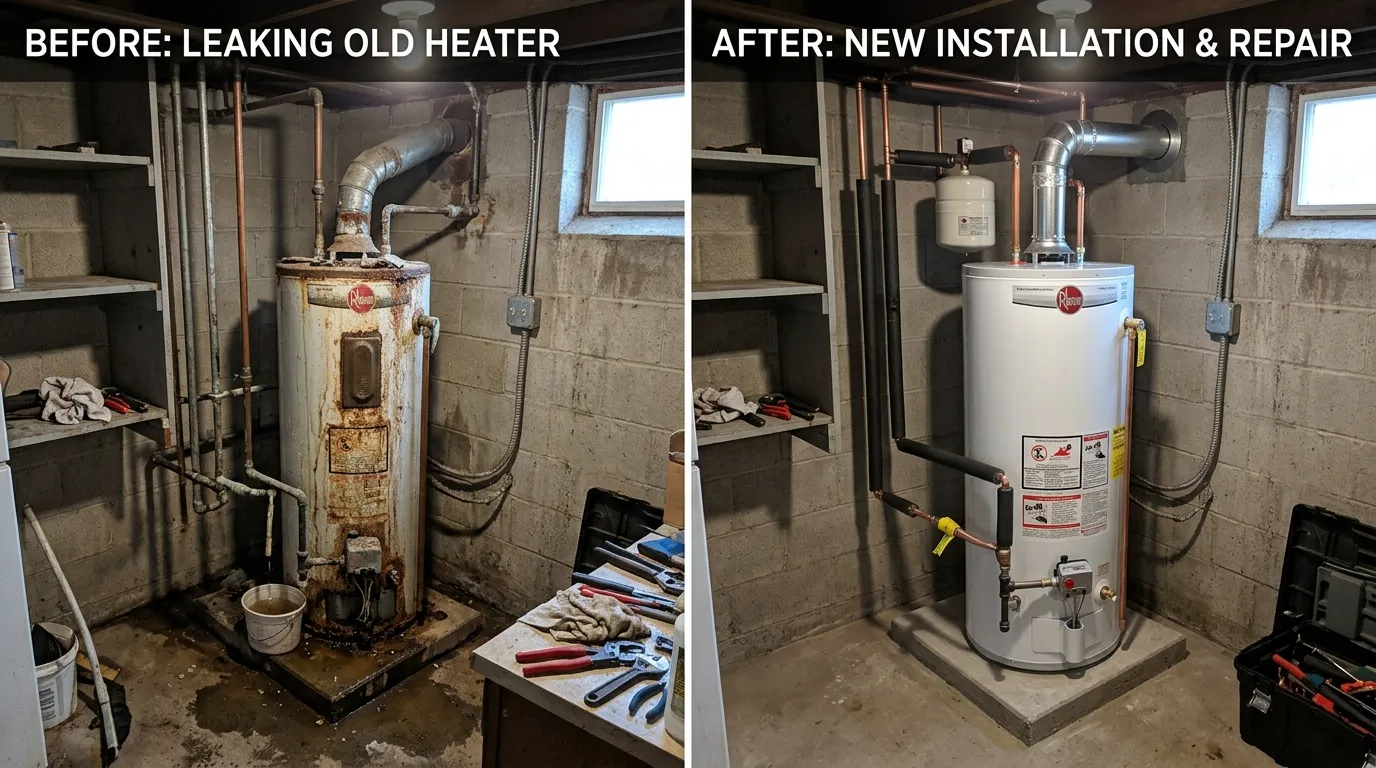
What Changes After the Water Heater Problem Is Properly Diagnosed
Many property owners call after a cold shower, a water-heater leak, popping sounds, rusty water, or a tankless unit that has become unreliable. The most valuable change is often clarity: knowing whether the unit has a repairable component issue, whether maintenance may help, or whether the tank or system condition makes replacement the better path.
No clear explanation for no hot water, slow recovery, or changing temperatures.
A defined diagnosis and practical repair or replacement path.
Water around the tank, rust concerns, or uncertainty about whether a leak can be repaired.
Clear identification of the likely leak source and an appropriate response plan.
Popping sounds, white flakes, or sediment concerns in a hard-water area.
Maintenance and water-treatment considerations matched to the unit condition.
Confusion about whether a Garland replacement may involve permits or inspection.
A clearer understanding of the project scope and local requirements to confirm.
How We Repair, Replace, and Install Water Heaters
Correct Equipment Selection and Installation Planning Matter
A successful water-heater repair or replacement is not only about putting in a new unit. The equipment must fit the property's hot-water demand, energy source, available space, access conditions, drainage needs, and applicable installation requirements. A tankless conversion may involve different venting, gas, electrical, condensate, and sizing considerations than a standard tank-for-tank replacement.
Center Garland Plumbing evaluates the property-specific conditions that influence safe, practical water-heater work.
- Equipment selection based on household size, business demand, recovery needs, and installation conditions
- Evaluation of tank, tankless, gas, electric, and hybrid water-heater options
- Attention to accessible shutoffs, drainage, connections, support, clearances, and serviceability
- Consideration of venting, electrical, gas-supply, pressure, drainage, and code-related requirements where applicable
- Replacement planning for garages, closets, attics, utility rooms, laundry areas, and commercial equipment spaces
Water Heater Repair or Replacement in Garland: How to Choose
A Clear Way to Evaluate a Failing Water Heater
The right choice depends on what failed, where the leak is located, the condition of the tank, the equipment age, recurring repair needs, available hot-water capacity, and the installation scope. A repair may be reasonable for a newer unit with a defined component failure. A leaking tank body, extensive corrosion, repeated breakdowns, or inadequate capacity can make replacement the more practical long-term choice.
| Scenario | Repair May Be Recommended | Replacement May Be Recommended |
|---|---|---|
| Failed thermostat, heating element, igniter, pilot-related component, or accessible valve | Often, when the tank and overall unit condition are sound | If repairs are recurring or other major issues are present |
| Leak at a connection or serviceable component | Often, depending on condition and source of leak | If corrosion or wider equipment damage is discovered |
| Water leaking from the tank body or base | Usually not a durable repair situation | Often, because a compromised tank generally cannot be permanently repaired |
| Popping, rumbling, sediment, or slow recovery | Maintenance or component service may help if the tank is intact | If problems occur with serious corrosion, age, and repeated failure |
| Repeated failures and increasing repair needs | Short-term repair may restore operation | Often worth considering for improved reliability |
| Household or business has outgrown the unit | Repair cannot meaningfully increase capacity | A larger tank, high-recovery model, or properly sized tankless option may help |
| Tank-to-tankless conversion | Not a repair decision | May be appropriate after a site assessment of fuel, venting, power, drainage, and demand |
When Replacement May Be the Better Option
- The tank body is cracked, corroded through, or leaking from the base
- Hot water is rusty and the equipment has visible corrosion or repeated issues
- The unit has repeated failures that keep adding repair costs and inconvenience
- The current heater cannot meet household or commercial demand
- A replacement offers a better opportunity to correct sizing, access, safety, or installation concerns
Water Heater Repair and Replacement Costs in Garland, TX
Clear Cost Factors Before You Make a Major Equipment Decision
The cost of a water-heater repair or replacement depends on the equipment and the property—not just the brand name on the tank. A simple component repair and a full conversion from a tank heater to a tankless system involve very different labor, materials, access, safety, permitting, and installation requirements.
For Garland water-heater replacement, the City lists a residential permit fee of $88 and a commercial permit fee of $175, and it states that completed work is inspected. Those fees are only one part of a project and do not represent the total repair or installation cost.
Main Cost Drivers
- Gas, electric, tank, tankless, hybrid, or commercial water-heater type
- Capacity, recovery rate, household size, business demand, and equipment sizing
- Location and accessibility, including garages, closets, attics, mechanical rooms, and tight spaces
- Repair scope, replacement parts, removal of old equipment, and condition of existing connections
- Vents, gas lines, electrical capacity, drainage, valves, pans, expansion equipment, and code-related updates where needed
- Emergency conditions, active leaks, water damage, and after-hours urgency
- Permit and inspection requirements for water-heater replacement in Garland
- Tank-to-tankless conversion work, which may require additional utility and installation changes
| Service Type | Typical Pricing Consideration |
|---|---|
| Diagnostic water-heater visit | Depends on symptom, equipment type, access, and testing needed |
| Component repair | Depends on the failed part, labor time, equipment age, and condition |
| Tank maintenance or flushing | Depends on the unit, sediment level, accessibility, and equipment condition |
| Standard tank replacement | Depends on fuel type, capacity, access, removal, installation changes, permits, and inspection requirements |
| Tankless repair | Depends on error code, scale, controls, venting, fuel/electric supply, and component needs |
| Tank-to-tankless conversion | Depends on sizing, gas capacity, venting, electrical work, drainage, equipment choice, and installation complexity |
| Commercial water-heater project | Depends on unit count, capacity, business downtime planning, access, and project scope |
A clear estimate should explain what is included, what conditions could change the scope, and which decisions are optional versus necessary for the specific equipment and property.
Which Garland Properties Need Water Heater Service?
Understanding When a Water Heater Issue Needs Professional Attention
Not every water-heater concern means an immediate replacement, but certain symptoms should not be ignored. A qualified evaluation is especially important when the unit is leaking, not producing hot water, making new noises, showing corrosion, producing rusty or cloudy hot water, repeatedly shutting down, or failing to meet the needs of the property.
- Homes with no hot water, unreliable hot water, or water that turns cold too quickly
- Properties with water around the tank, leaking valves, dripping fittings, or visible corrosion
- Buildings with gas water heaters that have pilot, ignition, venting, or gas-related concerns
- Homes with hard-water symptoms such as white flakes, sediment, popping sounds, and recurring scale issues
- Properties considering a replacement, larger tank, high-recovery unit, hybrid model, or tankless conversion
- Restaurants, offices, apartments, gyms, medical facilities, and other buildings where hot-water downtime affects operations
Commercial Water Heater Service for Garland Businesses and Multi-Unit Properties
Protect Hot-Water Availability Across Your Property, Facility, or Portfolio
Commercial plumbing problems can affect far more than one shower or sink. A failing commercial water heater can interrupt employee restrooms, customer facilities, commercial kitchens, laundry systems, cleaning routines, tenant services, and business operations. Center Garland Plumbing provides commercial water-heater diagnostics, repair, replacement planning, and related commercial plumbing support for Garland businesses and multi-unit properties.
| Commercial Service | Description |
|---|---|
| Water-heater diagnosis | Evaluate no-hot-water complaints, inconsistent temperatures, leaks, recovery issues, and equipment condition |
| Commercial repairs | Address appropriate component, control, connection, or performance issues when repair is practical |
| Commercial replacement | Plan removal and installation of replacement equipment when a unit is failing, leaking, undersized, or no longer reliable |
| Multi-unit planning | Coordinate service priorities across multiple heaters, buildings, suites, units, or property zones |
| Related commercial plumbing | Address associated leaks, drains, water lines, gas-related plumbing needs, water treatment, and facility plumbing concerns |
Commercial Property Types We Serve
Restaurants, Cafes & Food Service
Kitchens and food-service facilities
Apartments & Multi-Family
HOAs, condominiums, and multi-family properties
Retail, Offices & Warehouses
Logistics facilities and commercial spaces
Schools, Churches & Community
Recreation centers and community properties
Medical, Dental & Clinics
Salons, gyms, and service businesses
Industrial Facilities
High-demand operations and specialized sites
Why Commercial Owners Need a Coordinated Approach
- Minimize disruption to tenants, staff, customers, and daily operations
- Plan repairs or replacements around access, hours, occupant needs, and equipment demand
- Consider capacity, recovery, redundancy, and long-term reliability
- Connect water-heater work with broader commercial plumbing maintenance needs
| Commercial Service Situation | Typical Planning Consideration |
|---|---|
| Multi-unit property | Access coordination, tenant communication, unit count, and phased work |
| Restaurant or food service | Hot-water continuity, sanitation needs, operating hours, and rapid diagnosis |
| Office or retail site | Minimal disruption, building access, employee facilities, and equipment location |
| Warehouse or industrial facility | Safety procedures, equipment access, high-demand usage, and specialized site conditions |
Benefits of Hiring Water Heater Professionals in Garland
Safety, Reliable Hot Water, and a Better Repair-or-Replacement Decision
Water heaters combine hot water, pressure, gas or electric energy, components that wear over time, and installations that vary from one property to the next. Professional service helps identify the actual problem and avoid turning a repairable issue into a larger leak, safety concern, or premature replacement.
Identify Leak Source
Identify whether a leak comes from a connection, valve, relief discharge, condensation issue, or failing tank
System-Specific Diagnosis
Diagnose gas, electric, tank, tankless, and commercial water-heater problems with the appropriate approach
Reduce Water Damage Risk
Reduce water-damage risk by responding quickly to active leaks and failing equipment
Better Decisions
Improve decision-making around repair costs, replacement timing, capacity, and energy type
Hard-Water Expertise
Address Garland hard-water concerns such as sediment, mineral scale, white flakes, and popping sounds
Permit & Code Awareness
Consider permits, inspection requirements, and installation conditions when replacement is needed
Why DIY Water Heater Repairs Can Be Dangerous
Leave Gas, Electrical, Pressure, and Tank Repairs to Qualified Professionals
A water heater may look straightforward, but improper work can create serious safety and property-damage risks. Gas appliances involve combustion and venting concerns. Electric units involve energized components and water. Tanks operate under pressure and at high temperatures. An incorrect repair, installation, or adjustment can create a false sense of security while the underlying problem continues.
- Do not attempt gas-control, burner, venting, or gas-line work without qualified professional help
- Do not touch electrical equipment or stand in water near an electric water heater
- Do not modify or block pressure-relief components, safety valves, or discharge piping
- Do not assume a tank leak can be fixed by tightening a fitting; the water source must be identified first
- Do not ignore water around a heater in an attic, closet, garage, or interior space where damage can spread
- If you smell gas, leave the area and contact the gas utility or emergency services from a safe location
Answers to Common Water Heater Questions in Garland, TX
Quick Answers for Leaks, No Hot Water, Hard Water, and Replacement Decisions
My water heater is leaking from the bottom. What should I do?
A bottom leak may involve a drain valve, fitting, condensation, or the tank itself. If water is actively escaping, shut off the cold-water supply if it is safe, turn off the energy source, and arrange professional service. A leak from the tank body often leads to a replacement discussion because a compromised tank is usually not a durable repair.
Is a leaking water heater an emergency?
It can be. Active flooding, rapidly spreading water, water near electrical equipment, visible tank damage, suspected gas odor, or a heater leaking from an attic or interior closet should be treated as urgent. No hot water without a leak may be less urgent, but it still needs diagnosis.
Why do I have no hot water but my cold water still works?
The cause depends on the equipment. An electric water heater may have a breaker, element, thermostat, or wiring issue. A gas unit may have an ignition, pilot, control, fuel, or venting-related issue. A professional diagnosis can identify the cause safely.
Why is my water heater only making lukewarm water?
Lukewarm water can come from a failing component, sediment buildup, incorrect settings, limited recovery, undersized equipment, or simultaneous demand from showers, laundry, dishwashing, or commercial use.
Why is my water heater making a popping or rumbling sound?
Popping or rumbling can be associated with sediment or mineral scale in a tank water heater. Garland's hard water can contribute to calcium-carbonate buildup, which may affect efficiency and create white particles or noise.
Why are white flakes coming out of my hot-water faucet?
The City of Garland notes that white particles can be calcium-carbonate scale from a water heater. High thermostat settings may worsen scaling, and flushing may be appropriate depending on the equipment's condition. A water softener may help prevent future scale.
Is Garland water hard?
Yes. Garland reports water hardness averaging around 161 mg/L, or approximately 7.0 to 10.5 grains per gallon. Hard-water minerals can contribute to scale in water heaters, fixtures, and plumbing components.
Should I repair or replace my water heater?
A newer heater with a clear component failure may be repairable. A tank-body leak, serious corrosion, repeated failures, ongoing rust issues, or inadequate capacity may make replacement more practical. The right choice depends on diagnosis, condition, and your property's hot-water needs.
Can a leaking water-heater tank be repaired?
A leak from a fitting or replaceable component may be repairable. A tank leaking from its body or base is often a sign of internal tank failure and typically requires replacement rather than a temporary patch.
Do I need a permit to replace a water heater in Garland, TX?
Garland identifies water-heater replacement as permit-related work and states that completed work is inspected. The City's water-heater replacement information lists residential and commercial permit fees and provides a homeowner-affidavit option for qualifying owner-occupants. Confirm the current requirements for your property and project scope before installation.
Can I replace my tank water heater with a tankless model?
Often, yes. A tank-to-tankless conversion may involve equipment sizing, gas-supply capacity, electrical requirements, venting, condensate drainage, access, and permit considerations. A site assessment helps determine whether tankless fits your demand and property conditions.
Why does my tankless water heater go cold during a shower?
Tankless temperature swings can involve flow rate, sizing, scale, error codes, ignition or fuel issues, crossover conditions, or multiple fixtures using hot water at once. A technician can diagnose the specific cause.
How often should I flush a water heater in Garland?
The right interval depends on the manufacturer's instructions, the water conditions, equipment type, use level, and unit condition. Because Garland's water is hard, sediment and scale are relevant maintenance topics to discuss during service.
Can I still use water if my water heater is leaking?
Limit use if the heater is actively leaking, especially if water is spreading or the leak source is unknown. Using hot water can worsen some situations. Shut off the cold-water supply to the heater if safe and contact a professional for guidance.
What affects water-heater replacement cost in Garland?
Equipment type, tank size, fuel source, access, removal, installation changes, venting, electrical or gas requirements, drainage, permit requirements, and whether the project is a tankless conversion all affect the final scope and cost.
From First Diagnosis to Repair or Replacement Planning
Practical Help for Garland Hot-Water Problems
Center Garland Plumbing focuses on identifying the real issue before recommending a major decision. Whether the problem is a repairable component, hard-water sediment, a leaking connection, a damaged tank, a capacity problem, or a possible tankless upgrade, you deserve a clear explanation of the condition and available options.
When water-heater work is completed, the scope, equipment decisions, and applicable next steps should be clearly communicated so you understand what was addressed and what future maintenance or monitoring may be appropriate.
Center Garland Plumbing
217 N 10th StGarland, TX 75040
United States
Credentials That Matter for Water Heater Repair and Replacement
Water Heater Work Requires Proper Plumbing, Gas, and Safety Knowledge
Water-heater repair and replacement may involve plumbing connections, gas systems, electrical equipment, venting, pressure relief, drainage, equipment sizing, local permitting, and inspection considerations. Center Garland Plumbing provides professional plumbing service for water-heater problems that should not be treated as casual DIY projects.
Before scheduling a major replacement, homeowners and commercial property managers should ask appropriate questions about the scope of work, licensing, permit responsibilities, equipment specifications, installation requirements, and available documentation.
Residential & Commercial Experience
Water-heater repair and replacement experience for residential and commercial plumbing needs
All Equipment Types
Gas, electric, tank, and tankless equipment evaluation
Local Permit Awareness
Local project-scope awareness for Garland permit and inspection considerations
Related Plumbing Support
Professional plumbing support for related leaks, water lines, gas-related plumbing, drains, and water-treatment needs
Master Plumber Oversight
Responsible Master Plumber supervision for qualifying work
Clear Project Communication
Clear project communication for property owners and managers
Emergency Water Heater Repair in Garland, TX
Urgent Assistance When a Leak or Water-Heater Failure Cannot Wait
A water heater can become an emergency when water is actively leaking, flooding is spreading, the equipment is located where damage can travel quickly, hot water creates a burn risk, water is near electrical components, or gas odor is suspected. Center Garland Plumbing provides 24/7 emergency plumbing support for urgent water-heater problems in Garland and nearby service areas.
Not every no-hot-water problem requires an emergency response. But an active leak, suspected gas condition, electrical hazard, major tank damage, or risk of property damage should be addressed quickly.
Emergency Service Process
- Immediate phone discussion to identify the symptom, safety risks, and urgency
- Guidance on safe shutoff steps when appropriate
- Dispatch coordination for urgent leaks, water-heater failures, and related plumbing emergencies
- On-site diagnosis, leak control, repair planning, or replacement recommendations based on the equipment condition
- Support for related plumbing concerns such as water leaks, water damage, gas-related plumbing issues, and commercial hot-water disruption
Emergency Scenarios
- Water heater leaking from the bottom, top, relief area, fittings, or tank body
- Water pooling around the base of a heater in a garage, attic, closet, or utility room
- Heater failure affecting a restaurant, rental property, apartment, medical office, or commercial facility
- Suspected gas odor, ignition concern, or unsafe condition around gas water-heating equipment
- Water near electrical components or signs of electrical hazard around an electric water heater
- Sudden loss of hot water combined with visible leaks, damage, or safety concerns
Insurance Documentation for Water Heater Leak and Damage Incidents
Information That May Help You Communicate With Your Insurer
If a water-heater leak contributes to property damage, your insurer may ask for photos, invoices, a description of the issue, and repair or replacement documentation. Center Garland Plumbing can provide service-related documentation for work performed, subject to the scope of the service.
Insurance coverage depends on your policy, the cause of loss, maintenance history, endorsements, exclusions, deductible, and insurer determination. Center Garland Plumbing does not determine coverage or guarantee claim approval.
- Service notes describing visible conditions and work performed
- Available photos of damaged plumbing equipment or related conditions when included in the service scope
- Repair or replacement invoices and equipment information for completed work
- Written scope documentation that may help you discuss the incident with your insurance representative
Policy note: Review your own policy and speak with your insurance carrier or agent to understand what documentation, notice, mitigation steps, and claim procedures apply to your situation.
Understanding Water Heater Warranty Coverage
Know What Protects Your New Equipment and Completed Work
Warranty coverage can vary significantly by water-heater manufacturer, model, equipment type, registration requirements, installation conditions, maintenance history, and the specific labor or workmanship terms offered for the completed project. Before approving a replacement, ask for the applicable equipment warranty information and any workmanship coverage that applies to the quoted scope.
| Coverage Type | What to Review |
|---|---|
| Manufacturer equipment warranty | Tank, heat exchanger, components, model-specific terms, registration, and exclusions |
| Parts coverage | Whether a replacement component is covered by manufacturer terms |
| Workmanship coverage | Applicable labor or installation coverage for completed work, if offered |
| Documentation | Invoices, model and serial information, installation records, and maintenance recommendations |
Important notes: Warranty terms vary by unit type and manufacturer. Improper installation, lack of required maintenance, water-quality conditions, damage, unauthorized modifications, or failure to follow manufacturer instructions may affect coverage. Review the specific written warranty documents for your equipment.
Water Heater Service Equipment for Garland Homes and Businesses
Tools, Parts, and Plumbing Support for Better Diagnosis
Water-heater issues may involve more than the heater itself. A proper evaluation can require access to plumbing connections, valves, electrical components, gas-related equipment, drainage, venting, water pressure conditions, and adjacent plumbing. Center Garland Plumbing uses service equipment appropriate to the diagnostic and repair needs of the job.
Diagnostic Tools
For water-heater performance, leaks, and related plumbing conditions
Repair & Replacement Equipment
Equipment for common water-heater repair and replacement tasks
Plumbing Tools
Tools for connections, valves, drainage, water lines, and adjacent repairs
Service Vehicle Support
Service-vehicle support for Garland and surrounding North Texas properties
Full Plumbing Access
Access to broader plumbing services when a water-heater issue involves leaks, gas-related plumbing, water treatment, drains, or water damage concerns
10 Fully Loaded Vans
Equipped service vans ready for rapid dispatch 24/7
Payment and Project Planning for Water Heater Replacement
Understand the Scope Before Making a Major Equipment Decision
A water-heater replacement can be an unexpected expense, especially when a tank leaks, a commercial system fails, or a property needs multiple units replaced. Before approving a major project, ask for a clear explanation of the equipment options, installation scope, permit requirements, cost drivers, and payment expectations.
Center Garland Plumbing can discuss the project scope and available service options directly. Any financing, payment-plan, promotional, or special-offer availability should be confirmed at the time of service.
- Request a clear explanation of repair versus replacement options
- Compare tank, tankless, hybrid, and commercial equipment choices based on the property's needs
- Ask about the full installation scope, including access, removal, permit needs, and related plumbing work
- Confirm any current payment options, financing availability, eligibility, terms, and exclusions directly before proceeding
Water Heater Service for Garland Properties
Reliable Help When Hot Water Stops Working
Choosing a water-heater service provider is about more than a promotional claim. Property owners need clear communication, practical diagnosis, appropriate safety steps, and repair-or-replacement recommendations that match the condition of the equipment.
Center Garland Plumbing focuses on water-heater repair and replacement support for Garland homeowners, businesses, landlords, property managers, and commercial facilities.
Plumbing Contractor of the Year
Super Service Award
BBB Torch Award for Ethics
Best Plumber / Best of the Best
Community Impact & Distinguished Service
30+ Years Serving Garland
Service-Quality Highlights
- Symptom-first diagnosis for no hot water, leaks, unusual sounds, and inconsistent temperature
- Water-heater repair and replacement options explained in clear language
- Local service access for Garland homes, rental properties, and businesses
- Related plumbing capabilities for leak detection, water damage, gas-related plumbing, and commercial plumbing needs
- Practical guidance for hard-water sediment, tankless maintenance, and replacement planning
Water Heater Service Savings for Garland Property Owners
Discuss Available Offers Before Scheduling Major Work
Water-heater repair and replacement needs can arrive unexpectedly. When you call Center Garland Plumbing, ask about any current water-heater maintenance offers, repair specials, seasonal promotions, or eligibility-based discounts that may be available for your requested service.
Availability, qualifications, service limitations, dates, equipment exclusions, and discount terms should be confirmed directly before work begins.
Water Heater Flush & Tune-Up
Ask about current water-heater maintenance and service offers
Senior, Military & Veteran Programs
Ask whether any senior, military, veteran, or property-specific programs currently apply
Eligibility & Scope
Confirm eligibility, scope, exclusions, and whether offers can be combined
Clear Cost Explanation
Request a clear explanation of repair, replacement, and installation cost factors
Ask about current qualifying offers when you call +1 (945) 387-1123.
Water Heater Service Hours in Garland, TX
24/7 Availability for Water Heater Emergencies and Plumbing Problems
Water-heater problems do not always happen during convenient hours. A tank can leak overnight, a commercial system can fail before opening, or a family can discover there is no hot water before school or work. Center Garland Plumbing provides 24/7 emergency plumbing availability for urgent water-heater issues in Garland and surrounding areas.
| Day | Hours |
|---|---|
| Monday | 00:00–23:59 (24 Hours) |
| Tuesday | 00:00–23:59 (24 Hours) |
| Wednesday | 00:00–23:59 (24 Hours) |
| Thursday | 00:00–23:59 (24 Hours) |
| Friday | 00:00–23:59 (24 Hours) |
| Saturday | 00:00–23:59 (24 Hours) |
| Sunday | 00:00–23:59 (24 Hours) |
What to Look For in a Garland Water Heater Repair Company
Questions That Help You Choose the Right Water Heater Service
Not every water-heater company offers the same diagnostic depth, equipment experience, scheduling options, or related plumbing support. Instead of relying only on a headline or price claim, compare the factors that affect safety, repair quality, installation scope, and the long-term reliability of your hot-water system.
| Feature to Compare | Why It Matters |
|---|---|
| Diagnosis before replacement | Helps determine whether the issue is a repairable component or a failing tank/system |
| Experience with gas, electric, tank, and tankless equipment | Different systems require different troubleshooting and installation considerations |
| Clear explanation of costs | Helps you understand parts, labor, equipment, access, permit, and installation variables |
| Emergency availability | Important for active leaks, flooding risk, gas concerns, and urgent hot-water failures |
| Water-heater replacement planning | Helps account for sizing, capacity, venting, gas, electrical, drainage, and access needs |
| Related plumbing capability | Useful when water-heater issues involve leaks, water lines, gas-related plumbing, water damage, or commercial systems |
| Local permit awareness | Relevant when a Garland water-heater replacement requires permits and inspection |
When comparing options, ask whether the provider will explain the actual equipment condition, the repair-or-replacement reasoning, and the expected project scope before major work begins.
Contact Center Garland Plumbing for Water Heater Service in Garland, TX
Talk With a Local Plumbing Team About Your Water Heater Problem Today
Whether your water heater is leaking, making popping sounds, producing rusty or cloudy hot water, failing to heat, turning cold too quickly, showing a tankless error code, or reaching the point where replacement makes more sense than another repair, Center Garland Plumbing is ready to help you understand the next step.
Call for water-heater diagnostics, repair, maintenance, replacement planning, tankless service, emergency leak assistance, or commercial plumbing support in Garland and nearby North Texas communities.
Contact Details
Center Garland Plumbing
+1 (945) 387-1123
emergencyplumbergarlandtx.com
Water Heater Repair & Replacement
217 N 10th St
Garland, TX 75040, USA
24/7/365 — Always Open for Emergencies
Current Garland Water Heater Specials
- Water Heater Flush & Tune-Up Special
- Whole-Home Water Filtration Discount
- $99 Drain Clearing Special
- Free Camera Inspection with Drain Service
- Slab Leak Repair Discount
Request Water Heater Service
Fill out the form and a licensed Garland plumber will contact you immediately!
Protect your home, business, and hot-water comfort with professional water heater repair Garland TX property owners can call for clear answers, practical repair options, and water-heater replacement support.