Septic Tank Cleaning Garland TX
Garland-Area Septic Tank Cleaning & Pumping for Properties with Onsite Wastewater Systems
If your Garland-area property uses an onsite sewage facility, septic tank pumping Garland TX service can help remove accumulated solids, lower the risk of a messy backup, and identify warning signs before they turn into a larger wastewater problem. Center Garland Plumbing helps homeowners, property managers, and commercial property owners assess slow drains, septic odors, wet ground, gurgling toilets, alarms, and wastewater backing up into tubs, showers, or floor drains.
- Septic pumping & cleaning for eligible Garland-area systems
- Symptom-first help for backups, odors & wet ground
- Clear guidance when it's a drain, line, pump, or drainfield
- 24/7 emergency support for urgent wastewater concerns
Call +1 (945) 387-1123 to request septic tank cleaning, pumping, or a service assessment for a Garland-area property.
Request Septic Service
Fill out the form and a licensed Garland plumber will contact you to discuss septic pumping, backups, or a service assessment.
Practical, Property-Focused Septic Service for Garland-Area Homes and Businesses
A septic tank is not something to ignore until sewage is coming up in the shower or the yard starts smelling like wastewater. Routine pumping can remove the sludge and scum that accumulate in the tank, but a reliable service visit should also help you understand whether a problem points to a full tank, a clogged building drain, an alarm or effluent-pump issue, a damaged baffle, or a saturated drainfield.
Center Garland Plumbing serves residential and commercial customers from its Garland location at 217 N 10th St, Garland, TX 75040. Our team brings full-service plumbing knowledge to septic-related symptoms, which matters when the cause is not immediately clear. A toilet that bubbles when the washer drains, several fixtures running slowly at once, or sewage appearing in the lowest drain may involve more than routine pumping.
- Local Garland-based plumbing team serving North Texas properties
- Residential and commercial plumbing experience for drainage and wastewater-related symptoms
- Clear service explanations before major repair or replacement decisions
- Emergency support available when wastewater is backing up, surfacing, or creating an active property concern
- Plumbing, drain, sewer camera inspection, and water-damage-related service options when a septic pump-out is not the whole answer
Septic Tank Pumping for Garland-Area Onsite Wastewater Systems
Center Garland Plumbing helps properties throughout Garland and nearby North Texas communities that use septic or onsite wastewater systems rather than municipal sewer. Whether you own a home near Firewheel, manage a property near Duck Creek, maintain a site close to Lake Ray Hubbard, or need guidance for an outer-area property where public sewer is not available, the first step is determining what type of wastewater system serves the address.
For Garland-area properties, septic service is not a one-size-fits-all matter. Central Garland is extensively connected to municipal wastewater infrastructure, while properties in outer areas, nearby communities, larger-lot locations, or unsewered areas may use an onsite sewage facility.
Garland Neighborhoods We Serve
- Firewheel, Firewheel Estates, Firewheel Farms & Hills at Firewheel
- Duck Creek, Duck Creek Park & nearby residential areas
- Club Hill, Centerville, Embree, Spring Park, Valley Creek & Oakridge
- Brentwood Place, Brentwood Village, Golden Meadows, Glenbrook Meadows & New World
- Northeast Garland, Northwest Garland & South Garland
Nearby North Texas Communities
Local Destinations & Corridors We Serve
Specialized Septic Tank Cleaning and Pumping for Onsite Wastewater Systems
A septic tank, drainfield, pump tank, aerator, alarm, access riser, building drain, and wastewater line all work together. When something goes wrong, the symptom may look simple—such as a slow shower drain—but the underlying cause can be a full tank, a drain blockage, a failed effluent pump, a damaged inlet or outlet baffle, hydraulic overload, or drainfield saturation.
Professional septic tank cleaning in Garland, TX should involve more than pulling up with a truck and leaving after a pump-out. The service process should begin with the property's symptoms, known tank location, access conditions, maintenance history, system type, and any signs of backup or yard saturation. If the tank was recently pumped and everything is still draining slowly, additional diagnostic work may be necessary.
- Service guidance for conventional septic tanks, pump-assisted systems, and aerobic-system components
- Assessment of whether the issue appears related to the tank, building drain, sewer line, pump, alarm, or drainfield
- Recommendations based on observed conditions rather than assumptions
- Clear next steps when pumping may not solve the entire problem
- Access to related plumbing services, including drain cleaning, sewer camera inspection, hydro jetting, and sewer line repair when appropriate
Slow Drains, Backups, Odors, and Wet Ground Need the Right Diagnosis
A septic system can show warning signs long before a complete backup occurs. You may notice that the toilet bubbles when the washing machine drains, that several fixtures are slow at the same time, that there is a sewage smell in the yard, or that a wet, soft, unusually green area has developed around the drainfield.
Sewage backing up into the bathtub, shower, toilet, or lowest drain
Toilets bubbling, gurgling drains, or water rising during laundry
Slow drainage across multiple fixtures rather than only one
Septic odor inside the home, around the tank, or near the drainfield
Standing water, soggy patch, or unusually lush grass over the disposal area
A septic alarm going off on an aerobic or pump-assisted system
Wastewater appearing in the yard after heavy rain
A system that was pumped but continues to back up or smell
Note: A septic odor does not always prove the tank is full. Odors may be associated with vents, dry traps, obstructions, wind conditions, tank access points, or a drainfield problem. An onsite assessment is the reliable way to determine what is actually happening.
How Often Should a Septic Tank Be Pumped in Garland, TX?
Many homeowners ask whether septic tank pumping should happen every three years or every five years. The honest answer is that there is no single interval that fits every property. Tank capacity, the number of people in the home, daily water use, garbage-disposal use, solids buildup, system design, and maintenance history all affect the right schedule.
The EPA generally recommends that septic systems be inspected every one to three years and tanks be pumped every three to five years, while emphasizing that households may need a different schedule based on actual conditions.
| Maintenance Task | What It Helps Address | Typical Timing | Why It Matters |
|---|---|---|---|
| System and record review | Unknown pumping history, system type, past repairs | Before or during visit | Helps establish a realistic maintenance plan |
| Septic tank pumping | Sludge and scum accumulation | Often every 3–5 years | Reduces risk of solids moving to drainfield |
| Access & component observation | Lids, risers, baffles, alarms | During service | May reveal conditions needing follow-up |
| Pump/alarm evaluation | Pump-assisted or aerobic systems | As required | Identifies pump, float, or control issues |
| Drainfield symptom review | Wet ground, odors, backups | Whenever symptoms appear | Helps identify if pumping alone will solve it |
| Service documentation | Dates, observations, invoices | After service | Supports future planning and records |
Plan Routine Service Before You Have an Emergency
- Schedule a pump-out before a property sale if maintenance history is unknown
- Consider household size, guest use, home additions, and garbage-disposal use when planning
- Keep prior pumping and repair records with property documents
- Ask about the next recommended step if the system shows backup, alarms, wet ground, or recurring odor
- Do not wait for sewage to enter the home before addressing repeated slow drainage or gurgling
Septic Service for Homes, Rentals, HOAs, and Commercial Properties
Properties with onsite wastewater systems need a plan for tank pumping, component maintenance, and symptom response. A home connected to Garland's municipal sewer system does not need septic pumping, but a property served by a septic tank, aerobic system, pump tank, or onsite sewage facility does require responsible maintenance.
Single-Family Homes
Residential properties with septic tanks or onsite systems
Larger Households
Properties with higher daily water use and occupancy
Homes with Garbage Disposal
Added solids require more frequent pumping intervals
Rental Properties
Landlords needing maintenance records and documentation
HOAs & Communities
Multi-property communities with onsite systems
Community Facilities
Churches, offices, and buildings outside sewer coverage
Commercial Properties
Restaurants and businesses with onsite systems
Property Transactions
Buyers and sellers with limited system history
Rain, Water Use, Soil Conditions, and Seasonal Changes Can Affect Wastewater Flow
North Texas weather can place additional stress on onsite wastewater systems. Long hot periods may increase water use. Heavy storms can saturate soil and reduce how effectively a drainfield accepts wastewater. Occasional freezing temperatures can affect exposed plumbing, pump components, or vulnerable equipment.
Summer
More laundry, showers, irrigation activity, and guests can increase water demand on the septic system.
Heavy Rain
Saturated soil may make a drainfield less able to accept wastewater, worsening backup risk.
Winter Freezes
Exposed plumbing and certain system components may be vulnerable to cold damage.
Holidays & Guests
Higher occupancy may shorten the effective pumping interval and raise system strain.
Common Onsite Wastewater System Types in North Texas
Different properties use different onsite wastewater designs. Some systems rely mainly on a septic tank and soil absorption area, while others use pumps, alarms, aerobic treatment, spray distribution, or drip distribution. The system type changes what maintenance is needed and what a backup or alarm may mean.
| System Type | Typical Use | Key Components | Service Considerations |
|---|---|---|---|
| Conventional septic system | Homes with suitable soil | Septic tank, lines, drainfield | Routine pumping, baffle condition, drainfield review |
| Aerobic treatment system | Properties needing added treatment | Aerator, treatment tank, pump, alarm | Recurring maintenance, alarm response, aerator checks |
| Pump-assisted septic | Sites where gravity isn't enough | Pump tank, floats, pump, alarm | Electrical, float, pump & high-water checks |
| Spray-distribution system | Some aerobic/engineered systems | Treatment unit, pump, spray heads | Component-specific maintenance |
| Drip-distribution system | Engineered dispersal systems | Filters, tubing, pump, controls | System-specific maintenance required |
| Septic with drainfield | Common onsite approach | Tank, distribution, absorption field | Pumping won't repair a failed drainfield |
Texas calls septic systems onsite sewage facilities (OSSFs) in regulatory language. System design, repair, replacement, and operation requirements can vary by property and permitting authority.
What to Expect When Center Garland Plumbing Arrives
Initial Call & Symptom Review
We ask what you're noticing: slow drains, sewage in the tub, gurgling, odors, wet ground, alarms, recent rain, or unknown maintenance history. We also discuss whether the address is on septic or municipal sewer.
Property & Access Assessment
Safe access planning. Tank location, lid depth, gate access, landscaping, vehicle access, and whether the system has accessible risers can all affect the work.
System Condition Review
We assess available information and visible conditions before making assumptions. Alarms, pumps, aerators, or recurring backups help determine whether further diagnosis is needed.
Septic Tank Pumping & Cleaning
The pump-out process removes accumulated contents from the tank. The exact scope depends on system type, access, service conditions, and qualified hauling arrangements.
Findings & Recommendations
If a symptom suggests more than a full tank—persistent backups, failed alarm, standing water, or suspected line damage—we explain the practical next step.
Documentation & Future Planning
Keep your service records. Knowing the last pumping date, tank size, household use, and prior findings makes future maintenance decisions easier.
Clear Scope for Septic Pumping and Onsite Wastewater Service
A septic tank service visit should give you a clearer picture of what was done, what was observed, and what may require attention next. The exact scope can vary by system type, access conditions, tank location, and whether the call is preventive or emergency-related.
Review of reported symptoms and available septic-service history
Access assessment for tank lids, risers, gates, landscaping, and vehicle positioning
Septic tank pumping or pump-out service, where appropriate
Removal of accumulated sludge and scum from the tank
Basic visual observations of accessible lids, risers, baffles where possible
Discussion of warning signs such as wet ground, odors, alarms, gurgling, or backups
Written service information, recommendations, and next-step options
Referral to related plumbing diagnostics when appropriate
A pump-out is not automatically a complete septic inspection, drainfield certification, engineered evaluation, repair, or replacement project. Ask what is included before service begins so you understand the scope.
What Changes After Septic Pumping and Evaluation
A septic problem can create uncertainty quickly. You may have bought a home without records, noticed a smell after heavy rain, or discovered that the tub is backing up when the washer runs. A professional visit helps replace guesswork with useful observations and a service plan.
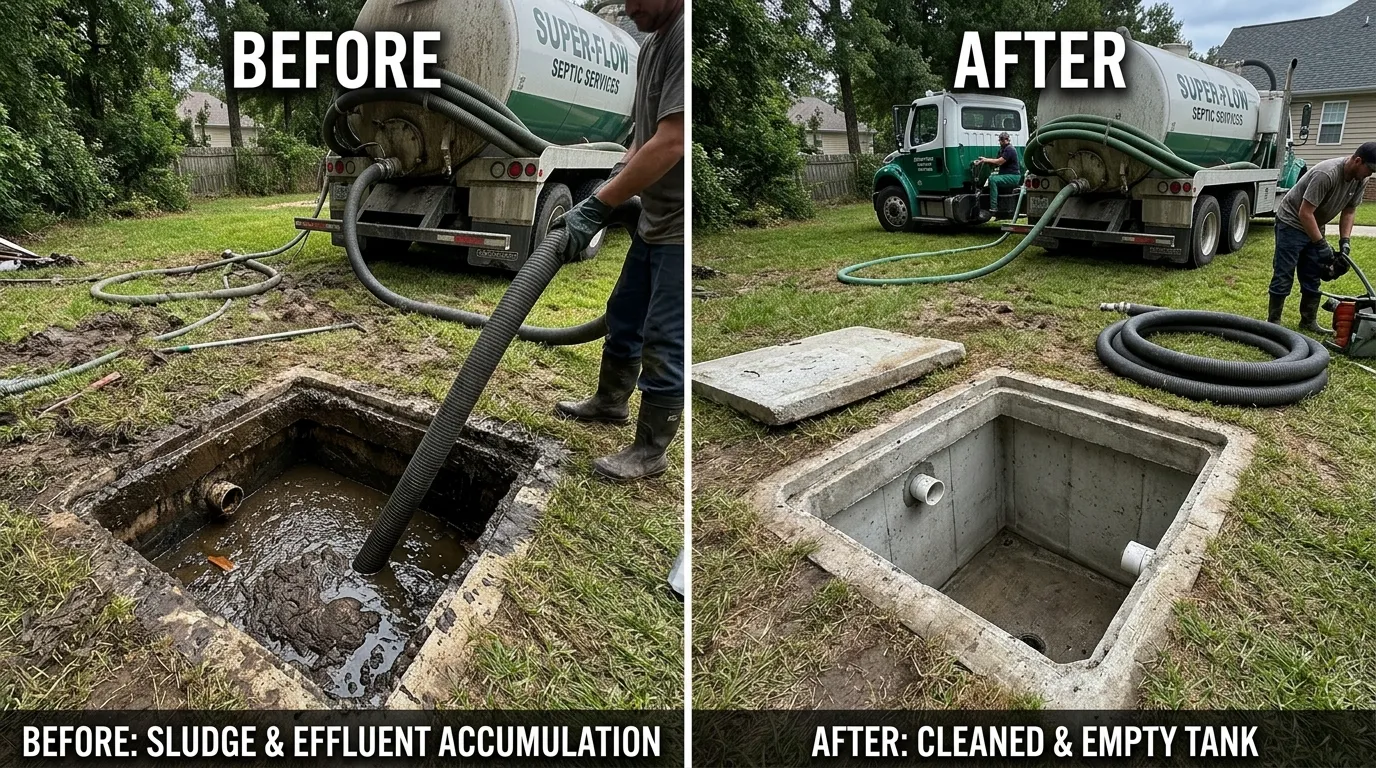
Before Service
- No clear record of the last pump-out
- Slow drains, toilet bubbling, odor, wet ground, or alarm with no obvious cause
- Uncertainty about city sewer vs. septic system
- Concern that a backup may damage floors, walls, or property
After Service & Evaluation
- Clearer understanding of whether the tank was due for pumping
- Service documentation for property records
- Guidance on whether a drain, line, pump, or drainfield needs attention
- Practical next step instead of a vague "wait and see" approach
- Better preparation for future maintenance decisions
Why Septic Pumping Does Not Fix Every Backup
Pumping removes sludge and scum from a septic tank. It can resolve a capacity-related issue when solids buildup is the problem. However, it does not automatically repair a blocked building drain, collapsed line, damaged baffle, failed effluent pump, alarm problem, saturated drainfield, or hydraulic overload.
| Situation | Pumping May Help | Repair/Replacement May Be Needed |
|---|---|---|
| Tank overdue for maintenance | Yes, especially with solids buildup | Possibly, if related components are damaged |
| Slow drains throughout property | Possibly | Yes, if drain, sewer, or drainfield issue exists |
| Sewage backing up after pumping | Unlikely to be the full solution | Often requires additional diagnosis |
| Broken lid, damaged riser, access issue | Pumping may still be part of service | Repair improves safety and future access |
| Failed pump, float, alarm, or aerator | Pumping alone doesn't restore operation | Component repair or replacement required |
| Wet, smelly, saturated drainfield | May temporarily reduce tank level | Drainfield/system evaluation may be necessary |
| Cracked tank or structural damage | Pumping may be needed for safe service | Repair or full replacement may be needed |
Replacement May Be the Better Path When:
- A tank or component is structurally cracked, deteriorated, or unsafe
- An alarm, pump, or aerator repeatedly fails
- Repairs are becoming frequent and no longer cost-effective
- System demand has changed because of household growth or property use
- The drainfield or other major system element needs an evaluation beyond pumping
What Affects Septic Tank Cleaning and Pump-Out Pricing?
The cost of septic pumping depends on the property, tank, access conditions, emergency status, system type, and whether the service reveals a separate repair need. A clear estimate should explain the work being priced rather than offering a vague flat figure.
Tank Size
Tank capacity and estimated waste volume
Tank Location
Position on property and ease of access
Access Conditions
Exposed vs. buried lids, obstructions, risers
Site Accessibility
Gate width, driveway, hose runs, slopes, landscaping
Service Urgency
Routine maintenance vs. emergency backup call
System Type
Pump-assisted, aerobic, or conventional components
| Service Type | Typical Pricing Considerations |
|---|---|
| Routine septic pumping | Tank capacity, service interval, access, waste volume |
| Emergency septic backup response | Urgency, call time, symptoms, access, added diagnostics |
| Pump/alarm or aerobic concern | Component type, electrical/control issues, repair scope |
| Drain or sewer diagnosis | Whether backup may be inside building plumbing or line |
| Riser, lid, baffle, or component repair | Parts, labor, access, system condition |
| Major system repair or replacement | Engineering, permitting, parts, labor, scope |
Not Sure if You Have Septic or City Sewer?
Not every Garland property uses septic. Many addresses are served by the municipal wastewater system, while some outer-area, nearby, or unsewered properties may depend on a private onsite sewage facility. If you are unsure, start with your water or wastewater bill, property disclosures, prior inspection reports, permit records, or visible septic-system access features.
You May Need Septic Service If Your Property Has:
- A septic tank, aerobic treatment unit, pump tank, drainfield, spray field, or drip system
- A private onsite wastewater system rather than a municipal sewer connection
- A septic alarm, pump-control panel, or treatment-system components
- Past septic pumping records or a known tank location in the yard
- Slow drains, repeated backups, odors, wet ground, or wastewater surfacing
- A history of septic maintenance from a previous owner or property manager
Routine pumping differs from work such as replacing a tank, altering a system, repairing a drainfield, or installing a new onsite wastewater facility. Texas rules can require permits and approved plans for construction, alteration, repair, extension, or operation of onsite sewage facilities.
Septic Service for Commercial and Multi-Unit Properties
Commercial and multi-unit properties with onsite wastewater systems need organized maintenance, clear records, dependable scheduling, and a plan for handling symptoms before they disrupt operations. Center Garland Plumbing works with property owners, facility managers, landlords, and decision-makers who need help assessing septic-related concerns alongside broader commercial plumbing and drainage needs.
| Commercial Need | Practical Focus |
|---|---|
| Scheduled septic pumping | Coordinate service around access, operations, and property use |
| Multi-building or multi-tank planning | Track locations, dates, access requirements, maintenance history |
| Active backup response | Limit water use, identify affected fixtures, determine source |
| Drain and sewer troubleshooting | Evaluate whether symptoms involve building drains or sewer lines |
| Pump, alarm, or aerobic concerns | Identify component issues and discuss next steps |
| Property records | Maintain invoices, service dates, observations, documentation |
Office & Retail
Properties outside municipal sewer coverage
Churches & Schools
Community facilities with onsite systems
HOAs & Rentals
Rental communities and managed properties
Warehouses
Storage sites with private wastewater systems
Protect Your Property, Plumbing, and Drainfield Investment
Professional septic tank cleaning and pumping helps property owners make informed decisions before wastewater problems create extensive disruption. Routine maintenance is not a guarantee against every system failure, but it can reduce solids buildup and provide an opportunity to catch concerns early.
Helps reduce chance of solids moving from the tank toward the drainfield
Creates documented maintenance record for owners, buyers, and managers
Identifies symptoms that may require drain, sewer, pump, or drainfield evaluation
Supports safer handling of wastewater and tank access
Provides clearer maintenance schedule based on actual conditions
Helps homeowners respond earlier to gurgling, odors, wet ground, or alarms
Do Not Attempt DIY Septic Tank Pumping or Tank Entry
Septic systems contain wastewater, bacteria, hazardous gases, and confined-space risks. Opening a tank, entering a tank, trying to pump it with improvised equipment, or attempting to repair electrical pump components without proper training can create a serious safety hazard.
Stop or Reduce Water Use
Significantly reduce water use inside the building during a suspected septic emergency.
Don't Run Appliances
Avoid the washer, dishwasher, or long showers while symptoms persist.
Don't Flush Repeatedly
Avoid flushing to "test" the system — it adds more wastewater to an overloaded system.
Keep Kids & Pets Away
Keep children and pets away from wet or sewage-smelling areas.
Don't Drive Over Drainfield
Do not walk, park, dig, or place heavy equipment over the drainfield.
Avoid Harsh Chemicals
Do not use drain cleaner, harsh chemicals, or septic additives as an emergency fix.
"Flushable" wipes, diapers, feminine products, paper towels, grease, coffee grounds, chemicals, and medications do not belong in a septic system. EPA guidance advises limiting septic inputs to human waste and toilet paper.
Answers to Common Septic Questions in Garland, TX
How often should I pump my septic tank?
Many systems need pumping every three to five years, but the proper interval depends on tank size, household occupancy, daily water use, garbage-disposal use, and the amount of solids in the tank. EPA guidance recommends periodic inspections and pumping on a schedule tailored to the property rather than waiting for a backup.
What are the signs that my septic tank needs pumping?
Common warning signs include slow drains throughout the home, gurgling toilets, sewage coming up in a tub or shower, odors, wet ground near the drainfield, a septic alarm, or unusually lush and soft grass in the disposal area. These symptoms can also have other causes, so professional assessment matters.
Is my septic tank full, or is the drain clogged?
One slow fixture may be a local drain clog. Multiple slow fixtures, toilet bubbling, water rising in a shower or tub, odors, or wastewater in the yard can suggest a larger drainage or septic-system problem. A pump-out may be appropriate, but a line, pump, or drainfield issue may also need diagnosis via sewer camera inspection.
Why is sewage coming up in my bathtub or shower?
Wastewater commonly shows up first at the lowest available drain when the building plumbing or septic system cannot move it away properly. Stop using water, avoid running appliances, and arrange prompt service.
Can I still use the toilet if the septic tank is backing up?
It is safer to minimize or stop water use until the issue is evaluated. Each flush, shower, load of laundry, or dishwasher cycle can add more wastewater to a system that may already be overloaded.
Why does my septic system still back up after pumping?
If the tank was pumped but drains are still slow or sewage continues to back up, the cause may involve a blocked building drain, damaged line, baffle problem, failed pump, alarm/control issue, hydraulic overload, or drainfield failure. Pumping does not automatically repair these conditions. Hydro jetting or sewer line repair may be needed.
Does a septic smell mean the tank needs pumping?
Not necessarily. Odors may relate to tank level, a venting issue, a dry drain trap, an obstruction, a damaged lid, weather conditions, or a drainfield problem. A service evaluation helps determine the source.
What should I do if my septic alarm goes off?
Reduce water use immediately. Do not ignore a high-water alarm or repeatedly reset it without understanding the cause. The problem may involve a pump, float, electrical control, aerator, or high liquid level.
Can I put "flushable" wipes in a septic tank?
No. "Flushable" does not mean septic-safe. Wipes can contribute to blockages and do not break down like toilet paper. Keep wipes, grease, paper towels, diapers, coffee grounds, chemicals, and medications out of the system.
Are septic additives necessary?
Additives are not a replacement for routine pumping, proper water use, or qualified repairs. TCEQ and EPA caution that products marketed as septic "fixes" may not solve the underlying issue and should not be relied on in place of maintenance.
Can I drive over my septic tank or drainfield?
Avoid driving, parking, building, pouring concrete, or placing heavy equipment over the tank or drainfield. Weight can damage underground components and compact the soil needed for wastewater treatment.
How do I find my septic tank in the yard?
Start with property records, prior septic permits, inspection reports, as-built drawings, seller disclosures, or maintenance invoices. Do not dig blindly or open a suspected tank without professional guidance.
Do I need a permit to repair or replace a septic system in Texas?
Routine pumping is different from system construction, alteration, repair, extension, tank replacement, or drainfield work. Texas requirements can involve permits and approved plans depending on the scope and local authority. Confirm requirements for the specific property and project.
Clear Guidance from the First Call Through the Next Step
Center Garland Plumbing aims to make septic-related service easier to understand. Whether you need a planned pump-out, help determining why the toilet is bubbling, or support during an active wastewater backup, our team explains the visible problem, the likely next step, and the related plumbing options available.
A septic system can require more than one kind of service over its life. We do not treat every odor as a full tank, every slow drain as a drainfield failure, or every backup as a simple pump-out. The right recommendation depends on the property, system, symptoms, access, maintenance history, and findings during service.
217 N 10th St, Garland, TX 75040, United States
Plumbing Credentials That Support Responsible Wastewater Troubleshooting
Septic systems connect to the property's plumbing, drainage, water-use habits, and wastewater pathways. Center Garland Plumbing's plumbing-focused service approach is valuable when a customer is unsure whether the problem is in the tank, inside the building drain, along a sewer line, or in the onsite wastewater system.
Master Plumber
Lead-level plumbing experience and oversight
Journeyman Plumber
Qualified field service and installation
Tradesman Plumber-Limited
Trade-level plumbing service capacity
Plumbing Inspector
Experienced plumbing-system evaluation
Diagnostic Support
Plumbing & drainage diagnostic experience
Emergency Help When Sewage Is Backing Up or Wastewater Is Surfacing
A septic or wastewater emergency can become disruptive fast. If sewage is coming up in a shower, bathtub, floor drain, or toilet—or if wastewater is surfacing in the yard—stop adding water to the system and seek help promptly.
Emergency Process
- Call +1 (945) 387-1123 and explain what you're seeing
- Reduce water use while the situation is assessed
- Share whether sewage is indoors, if the yard is wet, or if an alarm is sounding
- Provide the last known pump-out date, if available
- Explain whether recent heavy rain, laundry, guests, or unusual water use occurred
- Discuss whether the property uses septic or city sewer
Urgent Wastewater Scenarios
- Sewage backing up into a tub, shower, toilet, or floor drain
- A septic alarm sounding with rising water levels
- Standing wastewater, sewage odor, or a soggy area near the drainfield
- Multiple fixtures draining slowly or gurgling at the same time
- A system that was recently pumped but is still backing up
Service Records for Septic and Wastewater-Related Incidents
When a wastewater backup or plumbing problem damages flooring, walls, personal property, or business operations, the owner may need clear service records. Center Garland Plumbing can provide service documentation related to the work performed, observed conditions, repair recommendations, and invoices.
Useful Documentation
- Service dates and work descriptions
- Notes about reported symptoms and observed conditions
- Photographs where part of the service process
- Repair or replacement estimates when applicable
- Invoices and related plumbing-service records
- Recommendations for next diagnostic or repair steps
Warranty Coverage Areas
- Pumping Service: Scope, date, and observations recorded
- Repair Workmanship: Labor coverage terms and duration
- New Components: Manufacturer warranty for pumps, alarms, controls
- System Replacement: Permitting, installation docs, maintenance requirements
- Future Maintenance: Steps required to preserve coverage
24/7 Plumbing Support in Garland, TX
Center Garland Plumbing operates 24 hours a day, seven days a week for plumbing emergencies and service needs. Call to discuss septic tank pumping availability for your specific address, system type, access conditions, and symptoms.
Operating Hours
| Monday | 00:00 – 23:59 |
| Tuesday | 00:00 – 23:59 |
| Wednesday | 00:00 – 23:59 |
| Thursday | 00:00 – 23:59 |
| Friday | 00:00 – 23:59 |
| Saturday | 00:00 – 23:59 |
| Sunday | 00:00 – 23:59 |
Available Service Offers
- Senior customer offers on qualifying plumbing work
- Military & veteran offers on eligible services
- Seasonal specials when available
- $99 Drain Clearing Special
- Free Camera Inspection with qualifying service
- Water Heater Flush & Tune-Up Special
- Slab Leak Repair Discount
Center Garland Plumbing vs. a One-Size-Fits-All Response
When you search for a septic tank pumping company near me, it is important to choose a provider based on the actual problem—not simply the first company that promises a pump-out. A property with sewage coming up in the shower may need pumping, but it may also need drain, line, pump, alarm, or drainfield troubleshooting.
| Service Consideration | Center Garland Plumbing Approach | Limited-Scope Approach |
|---|---|---|
| Starting point | Review symptoms, property type, system history | Assume every backup is a full tank |
| Plumbing crossover | Can discuss drain, sewer, camera, plumbing causes | May focus only on one service type |
| Explanation | Explain why pumping may or may not solve the symptom | Provide little clarity about next steps |
| Emergency concerns | 24/7 plumbing support for active backups | May have limited emergency availability |
| Documentation | Provide service info and next-step recommendations | May offer limited records or explanation |
| Property type | Residential, commercial, landlord, HOA, facility | May focus only on standard residential |
Talk with a Garland Plumbing Professional About Your Septic or Wastewater Concern
If you are dealing with slow drains across the home, a toilet that bubbles, sewage coming up in the shower, a septic odor, a wet spot in the yard, an alarm, or unknown pumping history, Center Garland Plumbing is ready to help you understand the next step.
Reach Our Garland Office
(945) 387-1123
centergarlandplumbing@gmail.com
217 N 10th St
Garland, TX 75040, USA
24/7/365 — Always Open for Emergencies