Slab Leak Detection in Garland, TX — Fast Diagnosis for Hidden Water Leaks
Garland, TX slab leak detection for homes, rental properties, and commercial plumbing systems.
When you search for slab leak detection in Garland, TX, you may not be searching for the term "slab leak" at all. You may be asking, "Why is my water bill high?" "Why is one spot on my floor warm?" "Why is my water meter still moving?" or "Do I have to bust up the floor?" Center Garland Plumbing helps property owners identify the source of unexplained water loss, moisture, pressure changes, and suspected leaks beneath concrete slabs before a repair route is chosen.
A hidden leak can be stressful because the pipe may run below flooring and concrete. The right first step is not to assume the slab must be opened. It is to inspect the plumbing system, narrow down the source of the problem, and explain what testing or repair options make sense for the property.
- Slab leak detection for suspected under-slab water and drain-line problems
- Clear explanations before invasive repair options are considered
- Residential and commercial plumbing support in Garland
- Emergency plumbing support available for urgent water-loss concerns
Call +1 (945) 387-1123 to discuss a warm floor, moving water meter, unexplained water bill, or suspected leak under your slab.
Request Slab Leak Detection
Fill out the form and a licensed Garland plumber will contact you immediately!
Slab Leak Detection Focused on Evidence, Not Guesswork
A local plumbing approach built around clear findings, practical options, and property protection.
A suspected slab leak is not a routine drip under a sink. Water can travel below flooring, inside walls, or beneath a concrete foundation before the source becomes obvious. That is why Center Garland Plumbing focuses on the questions that matter first: Is there active water loss? Is the issue connected to a water line, drain line, fixture, water heater, irrigation system, or another source? How can the problem be narrowed down before major work is approved?
Our approach is designed to help Garland homeowners, landlords, HOAs, facility managers, and commercial property owners understand the next step without being pushed toward a repair method before the evidence supports it.
Symptom-First Evaluation
For warm floors, damp surfaces, meter movement, high bills, and running-water sounds.
Clear Diagnostic Findings
Plain-language explanation of what we found and the recommended next steps.
Related Plumbing Support
Includes water-line repair, pipe rerouting, repiping, sewer inspection, and water-damage concerns.
Direct Phone Access
Reach us at +1 (945) 387-1123 for urgent plumbing questions.
Slab Leak Detection Near Garland Neighborhoods, Business Hubs & Landmarks
Serving properties near Downtown Garland, Firewheel, Duck Creek, Lake Ray Hubbard, and surrounding North Texas communities.
Garland homes and businesses range from older properties with legacy plumbing to newer developments with concrete-slab construction. Whether your property is near Historic Downtown Garland, Firewheel Town Center, Duck Creek, Spring Creek, Lake Ray Hubbard, or a major commercial corridor, a hidden water leak can create uncertainty fast — especially when there is no visible pipe failure to point to.
Center Garland Plumbing provides Garland slab leak detection support for property owners who notice signs such as water around the foundation, a floor that feels warm near a bathroom or kitchen, a water bill that jumped for no clear reason, low water pressure, or moisture that keeps returning.
Garland Neighborhoods and Communities
Nearby Communities We Serve
Regional Destinations and Commercial Areas
Specialized Slab Leak Detection for Concrete-Slab Plumbing Systems
Garland plumbing specialists who investigate the source before recommending a repair route.
A suspected leak under a foundation should not be treated like a basic fixture repair. The leak may involve a pressurized hot-water line, cold-water line, drain or sewer line, pipe connection, water-heater connection, irrigation component, or another hidden plumbing source. Each possibility requires a different evaluation path.
Center Garland Plumbing approaches slab leak detection near Garland, TX as a diagnostic plumbing service. The goal is to gather usable evidence, explain what is known and unknown, and help the property owner decide whether the next step involves repair, line rerouting, sewer inspection, water-line work, repiping, or additional evaluation.
What a Specialized Approach Can Include
Reviewing the symptoms, timing, water use, and affected parts of the property
Checking accessible plumbing components before assuming the slab is the source
Evaluating water-meter behavior and possible hidden water use
Using appropriate diagnostic methods based on whether a water or drain-line issue is suspected
Explaining why a camera inspection, pressure test, isolation test, or moisture review may be appropriate
Presenting practical repair paths only after the suspected issue is better defined
What Happens When a Slab Leak Is Suspected in Garland?
Warm floors, high bills, moisture, and pressure changes are warning signs worth checking.
A slab leak is commonly used to describe a plumbing leak beneath a concrete foundation or floor slab. The term can refer to a pressurized water-line leak or, in some cases, a drain or sewer-line problem below the home. Because the pipe is concealed, water may travel before it appears as a visible wet spot.
The practical concerns are often the same: water waste, increased utility bills, damp flooring, musty odors, warped finishes, weakened flooring materials, or water collecting outside near the structure. A small leak may remain hidden for a long time, while a larger active leak can create urgent water-loss concerns.
A hidden plumbing leak can contribute to changes in moisture around or beneath a slab, but cracked tile, sticking doors, uneven floors, or foundation movement can also have other causes. Professional leak testing helps separate plumbing evidence from assumptions.
Common Concerns for Garland Property Owners
- Unexplained water bills or higher-than-normal usage
- A water meter that continues moving when known water use is off
- The sound of water running when faucets, appliances, and sprinklers are not operating
- A warm or hot spot on tile, concrete, vinyl, hardwood, or other flooring
- Damp carpet, buckled flooring, wet baseboards, or musty odors
- Lower water pressure at fixtures throughout the property
- Water pooling around the foundation or a yard area that remains soggy without rain
- New moisture problems near bathrooms, kitchens, laundry rooms, or mechanical areas
Prevent Larger Problems with Early Leak Detection and Plumbing Maintenance
What Garland property owners can monitor before a suspected hidden leak grows worse.
Slab leak detection is not generally an annual certification service in the way certain regulated devices are. However, routine plumbing attention can help property owners catch early signs of hidden water loss before moisture damage, flooring issues, or major repair decisions become more complicated.
If you have an older home, recurring pipe failures, a history of pinhole leaks, changing water pressure, unusually high bills, or aging plumbing materials, it may be sensible to discuss a broader plumbing inspection and repiping evaluation.
| Monitoring Task | What It Helps Identify | Suggested Timing | Practical Impact |
|---|---|---|---|
| Water-meter observation | Possible unwanted water use when fixtures are off | When bills spike or a leak is suspected | Helps identify whether water may be moving through the system |
| Visual plumbing review | Wet cabinets, fixture leaks, water-heater discharge, hose-bib issues | Seasonally or when symptoms appear | Rules out accessible causes before assuming a slab leak |
| Water-heater check | Sediment, valve discharge, corrosion, or connection leaks | Periodically and when moisture is present | Helps identify another potential source of water loss |
| Irrigation review | Broken sprinkler heads, underground irrigation leaks, controller issues | Before and during irrigation season | Helps distinguish outdoor water use from an interior plumbing issue |
| Pipe-condition discussion | Repeat leaks, aging materials, pressure issues, corrosion concerns | After a confirmed failure or repeated service calls | Supports long-term repair or repiping decisions |
Seasonal Considerations
Summer
Irrigation, pools, outdoor faucets, and heavier water use can make a rising bill harder to interpret.
Winter
Freezes can damage exposed pipes, valves, hose bibs, and outdoor plumbing components.
Spring & Fall
Useful times to check sprinklers, drainage, hose connections, and water-use patterns.
Garland's municipal water is considered hard, averaging 161 milligrams per liter or approximately 7.0 to 10.5 grains per gallon. Calcium and magnesium contribute to hardness, and mineral scale can affect plumbing fixtures and water-heater maintenance over time. Hard water does not prove the cause of an individual slab leak, but it is relevant context when evaluating aging plumbing systems. A water softener evaluation may also help.
Maintenance Guidance
- Keep access clear around water heaters, shutoff valves, hose connections, and plumbing equipment.
- Save prior repair invoices and diagnostic notes if your property has repeated leaks.
- Investigate sudden meter movement or unexplained water use early.
- Address visible corrosion, pressure changes, and recurring moisture before damage spreads.
Who Needs Slab Leak Detection in Garland, TX?
From single-family homes to commercial plumbing systems across the Garland area.
A hidden leak beneath a slab can affect many property types. The urgency, water use, access conditions, and repair planning may differ between a house, rental property, restaurant, office suite, medical facility, or multi-unit community, but the starting point is the same: determine whether active plumbing loss is occurring and where it may be coming from.
Center Garland Plumbing supports property owners and managers who need help with suspected under-slab water leaks, drain-line concerns, unexplained moisture, high water bills, and related commercial plumbing issues.
Single-family homes & townhomes
Rental homes & landlord-managed properties
Condominiums & HOA-managed communities
Apartment buildings & multifamily properties
Restaurants, cafes & food-service locations
Retail, shopping centers & mixed-use buildings
Office buildings & professional suites
Schools, churches, community & recreational buildings
Medical offices, clinics, dental practices & laboratories
Warehouses, industrial & commercial facilities
How Garland Weather, Water Use & Pipe Age Can Affect Hidden Leaks
Heat, hard water, seasonal use, and changing ground moisture all matter when assessing a plumbing problem.
Garland and the wider Dallas–Fort Worth area experience hot summers, periods of dry weather, intense rain events, occasional freezes, and high seasonal outdoor water use. These conditions do not automatically cause slab leaks, but they can influence water use, pipe stress, visible moisture patterns, and the way homeowners interpret changes around a concrete-slab property.
A water bill can rise because of irrigation, pool filling, outdoor spigots, a running toilet, appliance leaks, a water-heater issue, or a hidden water line. That is why commercial plumbing leak detection in Garland and residential leak evaluation should begin with a structured review instead of assumptions.
Summer
Heavy irrigation, outdoor water use, pools, and high demand can mask or mimic hidden water loss.
Winter
Freezing temperatures can damage exposed plumbing and create leaks that may be mistaken for under-slab issues.
Spring & Fall
Sprinkler startup, pressure changes, and rain-related moisture can reveal problems around the property.
Older Systems
Aging materials, prior repairs, corrosion, scale buildup, and repeated stress affect long-term pipe reliability.
Common Under-Slab Plumbing Leak Types in Garland Properties
Understanding whether the suspected issue involves a water line, drain line, or another plumbing source.
The phrase "slab leak" is useful, but it is broad. A proper evaluation should distinguish a pressurized water-line leak from a drain or sewer-line issue, an accessible fixture leak, an irrigation problem, or water originating from a water heater or appliance connection.
| Suspected Source | Typical Signs | Diagnostic Focus | Why the Difference Matters |
|---|---|---|---|
| Hot-water line | Warm floor, hot spot, higher bill, water-running sound | Pressure & location testing | Different repair approach than drain-line issue |
| Cold-water line | Meter movement, high bill, damp flooring, low pressure | Water-use isolation & water-line diagnostics | Often involves continuous pressurized water loss |
| Drain or sewer line | Odors, slow drains, recurring backups, moisture near fixtures | Camera inspection, isolation testing | Camera may show pipe condition but may not prove every leak location |
| Irrigation line | Wet yard, pooling water, high usage during watering season | Irrigation-zone & exterior review | Can mimic symptoms of hidden interior leak |
| Fixture or appliance | Running toilet, dishwasher/washer leak, water-heater discharge | Accessible component inspection | May be easier to repair without under-slab work |
| Water-heater issue | Relief-valve discharge, corrosion, running sounds, moisture near equipment | Tank, connections, valves review | Can cause ongoing water loss affecting bills and moisture patterns |
A sewer camera can be useful for viewing the interior of a drain line, but it does not automatically confirm every under-slab leak. Depending on the concern, a plumber may recommend an additional isolation, water-holding, or pressure-related test to understand whether the line is holding properly.
Our 6-Step Slab Leak Detection Process
What to expect when Center Garland Plumbing evaluates a suspected hidden leak.
Initial Call & Symptom Review
We discuss what you have noticed: warm flooring, high bill, moving meter, running-water sounds, damp surfaces, low pressure, water around the foundation, backups, or musty odors.
Property & Plumbing Assessment
Evaluation begins with accessible plumbing components and property conditions. We identify sources that may resemble a slab leak — toilets, water heaters, appliances, irrigation, fixtures, valves, and exterior lines.
Water-Use & System Checks
When appropriate, the plumbing system is checked for signs of active water movement, pressure loss, or other evidence that helps narrow the investigation.
Targeted Diagnostic Work
The method depends on the suspected line and symptoms. It may involve water-line testing, acoustic or electronic location methods, thermal review, moisture assessment, camera inspection, or drain-line testing.
Findings & Repair-Path Discussion
We explain what the inspection indicates, what remains uncertain, and which next steps make sense — localized access, rerouting, tunnel access, drain-line repair, or repiping.
Written Scope & Next-Step Planning
You receive a clear explanation of the recommended work, estimated scope, and related services such as water-line repair, sewer-line work, flooring coordination, or water-damage response.
What's Included in a Slab Leak Detection Visit
Clear diagnostic steps for Garland homeowners, property managers, and commercial plumbing clients.
Every suspected slab leak is different. A useful inspection is designed to move from visible and accessible clues toward targeted diagnostics rather than jumping straight to destructive access work.
- Discussion of symptoms, utility-bill changes, repair history, and affected areas
- Review of accessible fixtures, appliances, water-heater connections, valves, and exterior water sources
- Water-meter observation or water-use checks when appropriate
- Evaluation for signs of active water loss, moisture, pressure change, or drain-line concerns
- Targeted diagnostic work based on the suspected plumbing system
- Plain-language explanation of findings and recommended next steps
- Repair or replacement recommendations when the condition supports them
- Referral to related services such as Water Leak Detection, Water Line Repair, Pipe Repiping, or Sewer Camera Inspection
Key Advantages of Calling Center Garland Plumbing
A practical, property-focused approach for hidden leaks and commercial plumbing concerns.
When water may be leaking beneath flooring or a concrete slab, the goal is to reduce uncertainty quickly and avoid making a large repair decision based on guesswork. Center Garland Plumbing is structured to help Garland-area customers understand the problem, the available diagnostic methods, and the repair path that fits the evidence.
Symptom-Led Inspections
For warm floors, high bills, meter movement, pressure loss, and unexplained moisture.
Diagnostic Planning First
Before selecting direct slab access, tunneling, rerouting, or repiping.
Related Services Available
Residential and commercial plumbing services ready when the cause is identified.
Clear Communication
About what testing can establish and what additional work may be needed.
Emergency Support
Available for urgent active leaks and water-loss concerns.
Licensed Master Plumbers
Verified Texas plumbing credentials for your protection and peace of mind.
What Changes After Professional Slab Leak Detection?
A structured diagnosis can replace panic and assumptions with a defined next step.
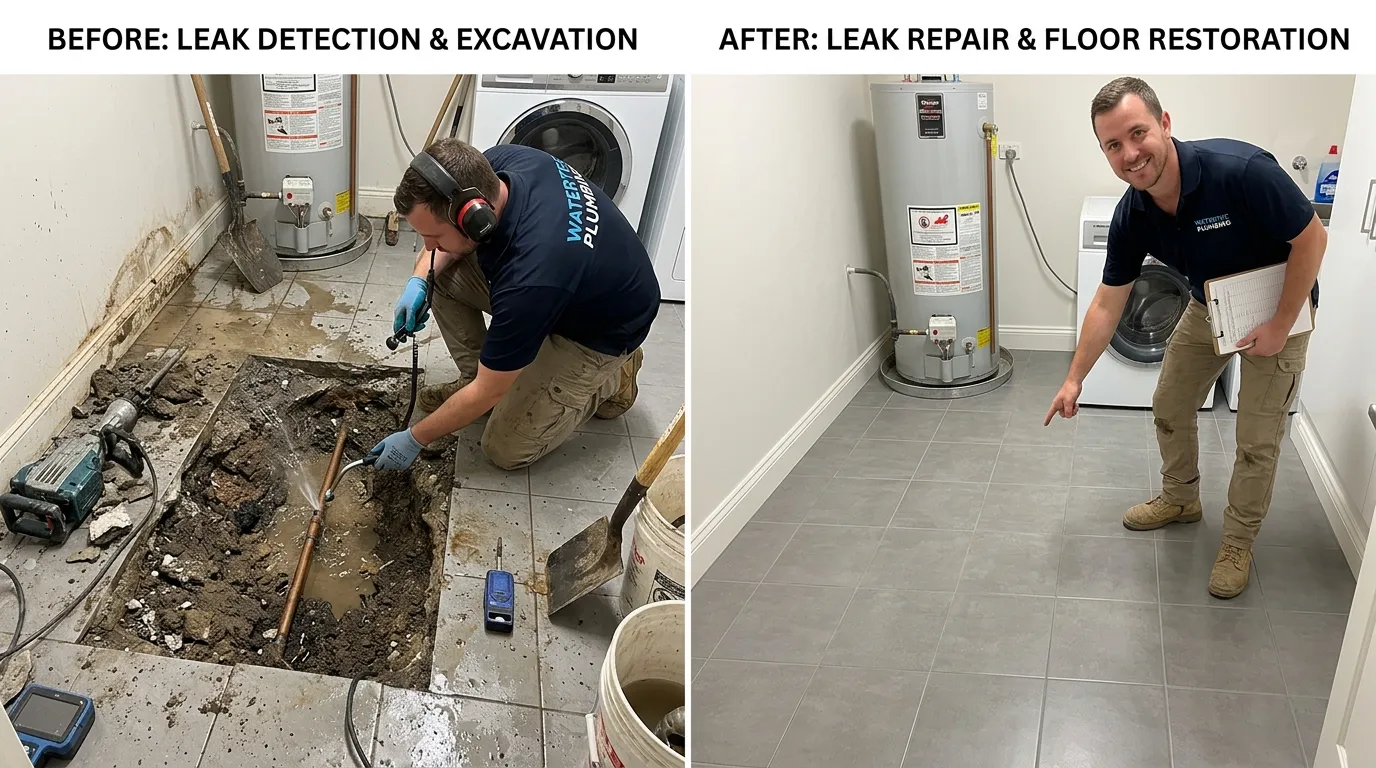
Many customers contact a plumber because they are worried about what they cannot see. The water bill rose. The floor feels warm. The meter moves. The carpet keeps getting damp. A contractor mentioned the word "foundation," and now the homeowner fears the worst.
Professional slab leak detection in Garland, TX is designed to bring the situation into focus. Instead of guessing from one symptom, the plumber reviews accessible causes, evaluates water-loss evidence, and explains the next repair or testing decision.
A warm floor, unexplained bill, damp area, or water-running sound with no clear source.
A more defined understanding of whether the issue is connected to water use, accessible plumbing, irrigation, a water line, or a drain-line concern.
Fear that the floor must immediately be broken open.
An explanation of diagnostic options and the conditions that may support localized access, tunneling, rerouting, or another solution.
Uncertainty about costs, insurance, and repair disruption.
A clearer scope of work, documented findings, and practical questions to discuss with your insurer, restoration provider, or other trade professionals.
How We Investigate Suspected Leaks Under Concrete Slabs
Diagnostic tools and methods are selected based on the plumbing system, symptoms, and property conditions.
A slab leak investigation should not rely on a single tool or one visible clue. The appropriate method depends on whether the concern involves a pressurized water line, a hot-water line, a drain or sewer line, an irrigation component, or another source of moisture.
Center Garland Plumbing uses a targeted approach so the evaluation matches the suspected problem. Some hidden leaks can be narrowed down through system observations and testing; others may require additional inspection or controlled access to confirm the final repair location.
Reviewing water-meter behavior when known fixtures and irrigation are off
Inspecting accessible plumbing connections, fixtures, water heaters, valves, and appliances
Pressure-related testing where appropriate to the suspected plumbing system
Acoustic or electronic listening methods when applicable
Thermal review for possible hot-water-line issues
Moisture evaluation around flooring, walls, and affected areas
Sewer camera inspection for relevant drain-line concerns
Drain-line isolation or water-holding tests when a camera view alone does not answer the question
Coordinated recommendations for repair, rerouting, repiping, or water-damage response
Should You Repair a Slab Leak or Replace the Affected Plumbing Line?
The right choice depends on leak location, pipe condition, home layout, flooring, and history of prior failures.
Once a leak is confirmed or strongly indicated, the next question is usually: "Do we have to break the slab?" There is no single answer for every Garland property. A targeted repair may be appropriate for one isolated failure, while recurring leaks, aging pipes, difficult access, or extensive flooring disruption may make another approach more practical.
| Scenario | Localized Repair May Be Considered | Reroute, Tunnel, or Replacement May Be Considered |
|---|---|---|
| One isolated, accessible pipe failure | When location is defined & remaining pipe is serviceable | When reaching the location would cause excessive disruption |
| Repeated leaks in older piping | Short-term solution in limited circumstances | Often worth evaluating because another section may fail later |
| Warm floor tied to a hot-water line | Targeted repair possible after proper diagnosis | Rerouting may be considered if pipe path has recurring problems |
| Significant flooring/finish concerns | Direct access may still be practical in some layouts | Tunnel access or new route may reduce interior impacts |
| Widespread pipe deterioration | One repair may address the immediate failure | Repiping may be evaluated for a longer-term solution |
| Drain or sewer-line defect under slab | Depends on line condition and access | Rerouting, excavation, lining, or replacement options |
When a Broader Solution May Deserve Discussion
- The property has a history of repeated under-slab leaks
- The plumbing is older or has evidence of widespread deterioration
- The same pipe material has failed in multiple locations
- The affected area is difficult to access without major flooring disruption
- The repair would address only one small portion of a system with broader risk
- The property owner wants to compare immediate cost against long-term maintenance considerations
What Affects Slab Leak Detection Costs in Garland, TX?
Clear pricing starts with understanding the problem, the line involved, and the repair path.
There is no responsible one-price answer for every suspected slab leak. The total cost can vary depending on whether a leak is confirmed, the type of plumbing line involved, accessibility, diagnostic method, flooring, depth, pipe material, repair method, and whether water damage or restoration is also needed.
Main Cost Drivers
- Whether the issue is a water-line, drain-line, sewer-line, irrigation, fixture, or appliance-related problem
- The complexity of locating the suspected source
- Access conditions beneath flooring, within walls, outdoors, or around the slab perimeter
- Pipe material, age, condition, and prior repair history
- The repair method: localized access, rerouting, tunnel access, repair, or repiping
- Flooring, concrete, cabinet, drywall, and finish restoration requirements
- Emergency water-loss conditions versus scheduled diagnostic work
- Whether separate water-damage mitigation or restoration is needed
| Service Category | What Influences the Estimate |
|---|---|
| Slab leak detection | Symptoms, property layout, access, suspected line type, testing needed |
| Water-line repair | Pipe location, material, pressure conditions, access method, restoration |
| Drain or sewer-line work | Line condition, camera findings, blockage, break location, access |
| Rerouting | New route, pipe length, building layout, code requirements, wall or attic access |
| Repiping | Property size, number of fixtures, pipe material, access, restoration scope |
| Water-damage response | Moisture extent, affected materials, drying needs, restoration coordination |
Texas consumer guidance recommends obtaining detailed written estimates and making sure warranty and cost terms are in writing before committing to work.
When Should a Garland Property Owner Call for Slab Leak Detection?
If the water bill jumped, the meter is spinning, or the floor feels warm, do not wait for more damage to appear.
You do not need to be certain that you have a slab leak before calling. In fact, most people are not certain. They simply know something is wrong: water keeps running, the floor feels hot, a room smells musty, the water pressure changed, the yard stays wet, or the utility bill suddenly climbed.
A professional evaluation is especially useful when one or more of the following situations applies.
Call for Evaluation When You Notice
- A water meter that moves after known fixtures, appliances, and irrigation are off
- A sudden or unexplained increase in water use or utility charges
- A warm or hot patch on the floor, especially near kitchens, bathrooms, laundry areas, or water-heater routes
- The sound of water running when the property is quiet
- Damp carpet, wet flooring, bubbling paint, warped materials, or recurring moisture
- A musty or mildew-like smell near flooring or walls
- Lower water pressure throughout the property
- Water collecting near the foundation or ground that stays wet without rain
- Recurrent pipe leaks, older plumbing, or previous under-slab repair history
- A need to distinguish a plumbing issue from irrigation, drainage, or foundation-related concerns
Slab Leak Detection for Commercial & Multi-Unit Properties
Protect water use, operations, tenant comfort, and building systems with a clear diagnostic plan.
Commercial plumbing leaks can affect more than one room or one utility bill. In offices, retail centers, restaurants, multifamily properties, warehouses, schools, medical facilities, and mixed-use buildings, hidden water loss can disrupt tenants, operations, inventory, flooring, sanitation, and maintenance budgets.
Center Garland Plumbing supports commercial plumbing clients who need a practical investigation of unexplained water use, recurring moisture, pressure loss, suspected slab leaks, drain-line concerns, and water-line failures.
| Commercial Service Need | How It Helps |
|---|---|
| Slab leak & hidden-water-loss evaluation | Narrows down unexplained water use and possible under-slab plumbing issues |
| Water-line assessment | Evaluates suspected pressurized line concerns, pressure loss, and active leakage |
| Sewer camera inspection | Investigates relevant drain and sewer-line conditions |
| Pipe repair & replacement planning | Provides options after affected line and access conditions are understood |
| Repiping consultation | Helps compare targeted repair against broader system renewal |
| Documentation support | Provides service details for maintenance records, owners, insurers, and restoration |
Commercial Properties We Assist
Retail spaces & shopping centers
Office buildings & professional campuses
Restaurants, cafes, hotels & hospitality
Apartment communities, HOAs & multifamily
Warehouses, industrial & logistics facilities
Schools, churches, community & recreational
Medical offices, clinics, dental & laboratories
Mixed-use buildings & large campuses
Benefits of Hiring a Professional for Slab Leak Detection in Garland
Accurate diagnosis, safer decisions, and a clearer repair plan for hidden plumbing problems.
Accurate Problem Separation
Distinguishes a possible slab leak from fixture, appliance, irrigation, water-heater, or exterior plumbing problems.
Avoid Invasive Work
Reduces the chance of choosing invasive work before the source is reasonably narrowed down.
Faster Response
Supports faster action when active water loss, moisture, or pressure changes are found.
Clearer Comparison
Provides a basis for comparing localized repair, rerouting, tunneling, or repiping options.
Documentation Support
Helps document service findings for maintenance records, restoration planning, or insurance conversations.
Connected Services
Links diagnosis with related plumbing services when repair is needed.
Why DIY Slab Leak Repairs Can Create More Damage
Do not cut concrete, open walls, or ignore active water loss before the plumbing issue is evaluated.
A warm floor or unexplained water bill can be alarming, but aggressive DIY actions can make the situation harder and more expensive. Cutting flooring, breaking concrete, digging near the foundation, changing piping, or attempting to seal an unknown leak without a clear diagnosis can damage plumbing, electrical systems, finishes, waterproofing, or structural components.
If you believe there is active water loss, focus on basic safety and call for professional help.
Safety Guidance
- If water is actively flooding or creating an electrical hazard, move people away from the affected area and contact emergency services if needed.
- If you can safely identify and operate the main water shutoff, reducing water flow may limit ongoing damage.
- Do not enter standing water near electrical outlets, panels, appliances, or exposed wiring.
- Do not assume a warm floor is safe to ignore; it can be a sign of a hot-water-line issue.
- Do not assume every wet area is a slab leak; accessible plumbing, toilets, water heaters, sprinklers, and appliances should be considered.
- Do not break concrete or flooring until the repair path has been discussed with a qualified plumbing professional.
Answers to Common Slab Leak Questions in Garland, TX
Quick answers for homeowners, landlords, and commercial property managers.
What are the first signs of a slab leak?
Common warning signs include a higher water bill, a meter that moves when known water use is off, running-water sounds, warm flooring, damp carpet or flooring, musty odors, low water pressure, or wet soil near the foundation. These signs do not prove the leak is beneath the slab, but they are good reasons to schedule an evaluation.
Why is my water bill suddenly so high in Garland?
A high bill may come from a hidden water-line leak, but it can also be caused by irrigation, a running toilet, a water-heater issue, appliance leaks, outdoor faucets, or other water use. A structured inspection helps narrow down the cause.
Why is one spot on my floor warm?
A warm or hot spot may be associated with a leaking hot-water line beneath the slab. However, a professional inspection is needed to confirm whether the warmth is related to plumbing and identify the likely source.
Why is my water meter moving when everything is off?
Meter movement can indicate water is passing through the system when you do not expect it to be. Before treating it as proof of a slab leak, confirm that fixtures, appliances, irrigation, and other known water uses are off or accounted for.
Can you find a slab leak without breaking concrete?
Testing and diagnostic methods can often narrow down the source before access work is considered. The exact ability to pinpoint a leak depends on the plumbing system, pipe material, leak type, building layout, and property conditions.
Do I have to break up my floor to repair a slab leak?
Not always. Once the issue is evaluated, options may include direct localized access, exterior tunneling, rerouting the affected line, or broader repiping. The best method depends on location, pipe condition, flooring, access, and whether the problem is isolated or recurring.
Can a sewer camera find a slab leak?
A sewer camera can be useful for inspecting the inside of a drain or sewer line, but it does not automatically prove every under-slab leak. Additional isolation or water-holding tests may be recommended when a drain-line leak is suspected.
Can a slab leak cause foundation damage?
A concealed plumbing leak can contribute to unwanted moisture changes beneath or around a slab. However, foundation cracks, sticking doors, uneven floors, and tile cracks can also have other causes. A plumbing evaluation can help determine whether active water loss is part of the concern, while foundation conditions may require separate assessment.
Does homeowners insurance cover slab leaks in Texas?
Coverage depends on the policy, cause of loss, exclusions, endorsements, deductible, and whether the claim involves the failed pipe, access work, resulting water damage, or restoration. Review your policy and speak with your insurer or agent before assuming coverage.
Should I turn off the water if I think I have a slab leak?
If there is active flooding, a strong water-running sound, rapidly worsening moisture, or a safety concern, turning off the main water supply may help reduce damage if you can do so safely. Call a plumbing professional for guidance based on the situation.
How long does slab leak detection take?
The time depends on the property size, symptoms, plumbing layout, accessibility, line type, and diagnostic testing needed. A simple source may be identified quickly, while a concealed or complex issue may require a more detailed evaluation.
Do I need a plumber or a leak detection company?
A plumbing professional who can diagnose the system and explain repair options can help connect the findings to the actual repair plan. Ask what testing methods are available, what the findings mean, and whether the same provider can perform the recommended repair work.
Start with Diagnosis Before Choosing a Slab Leak Repair
Center Garland Plumbing helps you understand the problem before you commit to the repair path.
A hidden leak can affect your home, rental property, commercial space, water bill, flooring, and peace of mind. The first goal is to identify the most likely source of the water loss and explain the next step in language you can use to make an informed decision.
Center Garland Plumbing is ready to discuss symptoms such as a warm floor, damp materials, running-water sounds, low pressure, meter movement, water around the foundation, or an unexplained rise in water use.
Center Garland Plumbing
217 N 10th St
Garland, TX 75040
United States
Ask for Current Licensing Information Before Plumbing Work Begins
Responsible Master Plumber verification helps Garland property owners make informed hiring decisions.
For plumbing work in Texas, consumers should ask for the Responsible Master Plumber's name and license number, then verify the license through the Texas State Board of Plumbing Examiners. The Board advises that the Responsible Master Plumber license number should appear in advertising and that customers should verify both license status and whether a certificate of insurance is on file.
Before approving slab leak detection, repair, repiping, or commercial plumbing work, ask for documentation that applies to the exact scope of your project.
Credential Checklist for Customers
- Responsible Master Plumber's full name
- Current Texas Master Plumber license number
- Confirmation of current license status through the Texas State Board of Plumbing Examiners
- Confirmation of insurance information where applicable
- Written estimate showing the work to be performed
- Written information about pricing, scope, warranty terms, and permit requirements
- Clarification about whether city permits or inspections apply to the proposed repair
Emergency Slab Leak Detection in Garland, TX
Call when active water loss, flooding, or worsening moisture cannot wait.
Some suspected slab leaks can be scheduled for evaluation, especially when the signs are limited to a moderate bill increase or an isolated warm spot. Others are more urgent. If you have active water loss, flooding, rapidly spreading moisture, a serious drop in water pressure, water coming through flooring, or water near electrical equipment, call for immediate plumbing guidance.
Center Garland Plumbing offers 24/7 emergency service support at +1 (945) 387-1123 for urgent plumbing concerns in Garland and nearby service areas.
Emergency Process
- Immediate phone discussion to understand symptoms and urgency
- Guidance on safe water shutoff steps when appropriate
- Plumbing evaluation and diagnostic planning
- Temporary mitigation discussion when active water loss needs control
- Repair-path recommendations after source is assessed
- Documentation of service findings for records or insurance
Urgent Situations
- Water actively coming up through flooring
- Water line appears to be leaking continuously
- Water meter is moving rapidly with no known water use
- Flooring, drywall, cabinets, or walls becoming wet quickly
- Water near outlets, panels, appliances, or electrical equipment
- Commercial property experiencing water loss disrupting operations
- Property has no reliable water pressure or major plumbing failure
Documentation Support for Slab Leak-Related Water Damage
Clear service records can help you communicate with your insurer, restoration provider, or property manager.
If a hidden plumbing leak contributes to water damage, an insurance company may request information about the condition, cause, date discovered, plumbing repair, and resulting damage. Center Garland Plumbing can provide service-related documentation for the plumbing work performed.
Insurance coverage is policy-specific. A policy may treat the failed pipe, access work, resulting water damage, drying, flooring, and restoration differently. No plumbing contractor can promise what an insurer will cover.
Documentation That May Be Useful
Inspection notes describing observed symptoms and accessible conditions
Service findings and diagnostic information
Photos of visible plumbing damage or moisture conditions when available
Repair estimates and invoices for completed plumbing work
Descriptions of recommended repair methods and reasons
Information for coordination with water-damage restoration providers
Policy note: Review your policy carefully and speak with your insurer or agent about deductibles, exclusions, access coverage, resulting water damage, restoration, and any required claim-reporting steps.
Understand Warranty Coverage Before Slab Leak Repair Begins
Ask for workmanship and manufacturer warranty details in writing.
Warranty coverage depends on the specific repair, pipe material, installed components, manufacturer terms, site conditions, and scope of work. Before approving a slab leak repair, water-line reroute, pipe replacement, or repiping project, ask for the applicable warranty terms in writing.
| Coverage Type | What to Ask About |
|---|---|
| Workmanship | What labor is covered, for how long, and under what conditions |
| Pipe and fittings | Which materials are installed and whether manufacturer warranties apply |
| New equipment or components | Whether valves, fittings, access components, or other parts have separate terms |
| Existing plumbing | Whether aging or unmodified parts of the system are excluded |
| Restoration work | Whether flooring, drywall, concrete patching, paint, cabinets, or finish restoration is included |
| Maintenance obligations | Whether proper use, maintenance, or timely repairs are required to preserve coverage |
Important note: Warranty terms are project-specific. Make sure the written estimate identifies the plumbing work included, the materials to be used, and the warranty terms that apply to the approved scope.
Prepared for Diagnostic Plumbing Work in Garland
The right tools and process help narrow down hidden water-loss concerns.
Slab leak detection requires more than a standard plumbing hand-tool kit. The appropriate equipment and diagnostic process depend on the symptoms, plumbing layout, suspected line type, and accessibility of the property.
Center Garland Plumbing is prepared to evaluate hidden-leak concerns and coordinate the related plumbing work needed after the source is identified. Our 10 fully equipped service vans are ready for rapid dispatch across the Garland area.
Water-meter and water-use observation
Pressure-related testing for applicable systems
Acoustic or electronic leak-location methods
Thermal review for suspected hot-water-line leaks
Moisture assessment around affected areas
Water-line repair and replacement planning
Pipe rerouting and repiping consultation
Emergency plumbing support for active water-loss
Discuss Payment Options for Larger Slab Leak Repair Projects
Repair paths such as rerouting or repiping can require careful budgeting.
A confirmed slab leak can sometimes require more than a small plumbing repair. If the affected pipe is difficult to access, the system has recurring failures, or the recommended solution involves rerouting, tunnel access, or repiping, property owners may need time to plan the project budget.
Ask Center Garland Plumbing about currently available payment options, if any, before approving a major project. Availability, qualifications, terms, rates, payment schedules, and project eligibility can change and should always be reviewed in writing before work begins.
Projects That May Require Budget Planning
- Under-slab water-line repair
- Pipe rerouting projects
- Larger repiping work
- Commercial plumbing repairs involving multiple units or zones
- Water-damage coordination and restoration-related work
- Multi-phase work for rental, HOA, or commercial properties
Choose a Garland Plumbing Provider Based on Verifiable Information
Ask clear questions about licensing, scope, estimates, repair options, and customer service.
Awards and recognition can be meaningful when they are current, independently verifiable, and relevant to the exact company performing the work. When choosing a plumber for slab leak detection, the most useful information is often more practical: current licensing, clear estimates, written warranty terms, diagnostic methods, repair options, and willingness to explain the findings.
What to Look For When Selecting a Provider
A current Responsible Master Plumber license you can verify
Clear explanation of the diagnostic approach
Written scope of work and pricing before major repairs begin
Honest discussion of what has and has not been confirmed
Repair options explained without pressure to choose one method
Clear distinction between plumbing repair, access work, and restoration
Responsive communication for urgent water-loss situations
Service documentation for records and insurance conversations
Senior and Military Discounts for Plumbing Services
Contact Center Garland Plumbing to ask about current qualifying offers.
Discounts, specials, and eligibility requirements can change. If you are a senior citizen, active-duty service member, veteran, or military family member, call Center Garland Plumbing at +1 (945) 387-1123 to ask whether any current promotions apply to slab leak detection, plumbing repairs, water-line work, or other services.
Before Scheduling, Ask About
- Current eligibility requirements
- Whether an offer applies to diagnostic visits, repairs, or replacement work
- Whether discounts can be combined with other promotions
- Any service-area, scheduling, or project-scope limitations
- Written confirmation of the offer before approving work
Slab Leak Detection Service Hours in Garland, TX
24/7 availability for urgent plumbing concerns, water loss, and emergency support.
Hidden water-loss concerns do not always happen during regular business hours. Center Garland Plumbing lists 24/7 emergency plumbing availability for Garland property owners who need help with active leaks, water coming through flooring, loss of water pressure, urgent moisture concerns, or other serious plumbing problems.
| Day | Hours |
|---|---|
| Monday | 00:00 – 23:59 (24/7) |
| Tuesday | 00:00 – 23:59 (24/7) |
| Wednesday | 00:00 – 23:59 (24/7) |
| Thursday | 00:00 – 23:59 (24/7) |
| Friday | 00:00 – 23:59 (24/7) |
| Saturday | 00:00 – 23:59 (24/7) |
| Sunday | 00:00 – 23:59 (24/7) |
Contact Center Garland Plumbing
Phone: +1 (945) 387-1123
Email: centergarlandplumbing@gmail.com
Website: emergencyplumbergarlandtx.com
Address: 217 N 10th St, Garland, TX 75040
What to Look for in a Garland Slab Leak Detection Provider
Compare diagnostic clarity, repair options, and documentation — not just a headline price.
When water may be leaking under a slab, the lowest initial quote does not always provide the clearest path forward. A useful provider should explain the symptoms, diagnostic steps, limitations of the findings, repair alternatives, expected disruption, and written scope before large work begins.
| Feature to Compare | A Strong Experience | A Limited Approach to Avoid |
|---|---|---|
| Initial assessment | Reviews symptoms, accessible plumbing, water use, likely sources | Assumes every high bill or warm floor is a slab leak |
| Diagnostic explanation | Explains why a specific test or tool is being used | Uses technical terms without explaining results |
| Repair planning | Discusses direct access, rerouting, tunneling, and broader pipe options | Recommends one expensive method before diagnosis supports it |
| Estimate clarity | Separates diagnostic, plumbing repair, access, and restoration | Provides vague pricing without defining the scope |
| Licensing & documentation | Provides current licensing and written service records | Avoids written details or cannot explain credentials |
| Insurance discussion | Provides documentation while recognizing coverage depends on policy | Promises that insurance will pay |
| Emergency response | Helps assess urgency and safe next steps | Uses urgency language without practical guidance |
Contact Center Garland Plumbing for Slab Leak Detection in Garland, TX
Talk with a plumbing professional about a warm floor, moving meter, high water bill, or suspected leak under your concrete slab.
If you are unsure whether the problem is a slab leak, a water-line failure, a drain-line issue, an irrigation leak, a water-heater problem, or another hidden plumbing concern, Center Garland Plumbing can help you start with the right questions.
Call for help if your water bill jumped for no reason, your meter is still spinning, you hear water running when everything is off, the floor feels warm near the kitchen or bathroom, water is coming up through the floor, the carpet keeps getting damp, or you need commercial plumbing support for unexplained water loss.
Contact Details
217 N 10th St
Garland, TX 75040, USA
+1 (945) 387-1123
Slab Leak Detection
Protect your home, commercial property, flooring, water system, and peace of mind with professional slab leak detection in Garland, TX from Center Garland Plumbing.