Water Damage Restoration in Garland, TX — Fast Help for Leaks, Flooding & Sewage Backups
Garland Water Damage Restoration to Protect Your Home, Business, and Belongings
When you need water damage restoration Garland TX property owners can rely on, the situation is usually already stressful: water is coming through the ceiling, spreading across the floor, soaking carpet, leaking from a water heater, backing up into a bathtub, or coming into the garage after a storm.
Center Garland Plumbing provides emergency water cleanup, plumbing-source diagnosis, water extraction, moisture assessment, structural drying support, and repair coordination for residential and commercial properties throughout Garland and nearby North Texas communities. Our team is positioned to help when a burst pipe, slab leak, appliance failure, overflowing toilet, sewer backup, or storm-related water intrusion cannot wait.
- Emergency water removal for burst pipes, ceiling leaks, and flooded rooms
- Plumbing-source diagnosis for pipe leaks, slab leaks, water heaters, sewer backups
- Moisture assessment and drying support for wet walls, floors, and cabinets
- Available 24/7 for urgent water damage situations across Garland
Call +1 (945) 387-1123 for emergency water damage restoration, water removal, leak-related cleanup, and clear next-step guidance in Garland.
Request Water Damage Help
Fill out the form and a licensed Garland plumber will contact you immediately!
Water Damage Restoration Backed by Plumbing Experience and 24/7 Availability
A Local Team for Water Emergencies, Source Repair, and Property Protection
Water damage is not just a cleanup issue. It can be a plumbing problem, a sewer problem, a rain-intrusion problem, a drainage problem, or a combination of several issues. Center Garland Plumbing helps property owners identify what caused the water, stop the plumbing source when applicable, and take practical next steps to limit additional damage.
A homeowner may see wet drywall, a buckling floor, a stained ceiling, or soaked carpet. A property manager may discover water in a mechanical room, a tenant-space leak, a backed-up drain, or a damaged water line. In each case, the first priority is protecting people, limiting the spread of water, and identifying whether professional extraction, sanitation, drying, plumbing repair, or utility coordination is needed.
30+ Years in Garland
Three decades of plumbing and water-damage experience serving Garland and surrounding communities.
50 Skilled Professionals
A full team supported by 10 fully equipped service vans ready for emergency dispatch.
Full-Service Capability
Residential, commercial, drain, sewer, water-line, slab-leak, and water-damage service capabilities.
24/7 Emergency Response
Around-the-clock emergency service for urgent plumbing and water-related problems.
We provide clear communication about the difference between source repair, water mitigation, drying, and reconstruction — so you understand exactly what each step is meant to accomplish.
Water Damage Cleanup Near Garland Neighborhoods, Creeks, Business Areas & Landmarks
Serving Properties Near Duck Creek, Firewheel, Downtown Garland, and Major Local Corridors
Water damage can affect any part of Garland, whether it begins with a failed supply line inside an older home, a water heater leak in a Firewheel-area garage, a toilet overflow in a Downtown Garland business, or rainwater entering near an exterior door after a severe storm.
Garland has floodplain and drainage considerations associated with Duck Creek, Rowlett Creek, Spring Creek, and their tributaries. The City identifies approximately 4,200 acres of 100-year floodplains along these creek systems. Water entering from outside during a storm or rising-water event is different from a sudden indoor plumbing leak, both from a cleanup perspective and potentially from an insurance perspective.
Garland's stormwater system and sanitary wastewater system are separate. Stormwater from rainfall enters drainage channels and street inlets, while wastewater comes from toilets, sinks, household drains, and some industrial drains. That distinction matters when a customer sees water coming into a property, notices a sewer odor, or has water backing up through a tub, shower, toilet, or floor drain.
Garland Neighborhoods & Communities Served
- Buckingham North and the Plano Road corridor
- Duck Creek, Duck Creek Park, and nearby established neighborhoods
- Centerville, Club Hill, and Eastern Hills
- Downtown Garland, Historic Downtown Garland, and Heritage Crossing
- Firewheel, Firewheel Estates, Firewheel Farms, and Hills at Firewheel
- Spring Park, Spring Creek Forest Preserve, and nearby drainage areas
- Oakridge, Oaks, Rose Hill, Embree, Valley Creek, and Brentwood communities
- Northeast Garland, Northwest Garland, South Garland, and East Garland areas
Nearby Cities & Communities
Regional Hubs & Landmarks
- Firewheel Town Center & Downtown Garland Square
- Lake Ray Hubbard & Rowlett Creek Preserve
- Spring Creek Forest Preserve & Duck Creek Golf Club
- Curtis Culwell Center & Granville Arts Center
- Hawaiian Waters Garland & Firewheel Golf Park
Specialized Water Damage Restoration for Leaks, Flooding, and Contaminated Water
North Texas Water Cleanup Support Focused on the Source, the Moisture, and the Next Repair
A wet floor may look like a simple cleanup issue, but visible water is only part of the problem. Water can move under flooring, behind baseboards, into wall cavities, below cabinets, through insulation, and across adjacent rooms. Drying the surface without checking for trapped moisture can leave hidden damage behind.
Center Garland Plumbing approaches water-related emergencies by looking at the full picture:
- What caused the water?
- Is the source still active?
- Is the water from a clean supply line, an appliance, a drain, a sewer backup, or storm intrusion?
- Did water reach electrical components, porous materials, cabinetry, walls, or flooring?
- Is plumbing repair needed before drying can begin?
- Does the property need water extraction, sanitation, structural drying, or reconstruction planning?
A plumber may be needed to stop a burst pipe, repair a water line, replace a failed water heater, clear a sewer line, repair a toilet, or locate a slab leak. Water mitigation addresses the moisture and materials affected after the source has been controlled.
Why Specialized Handling Matters
- Water can travel farther than the visible puddle
- A ceiling leak can affect insulation, framing, drywall, flooring, and rooms below
- A sewer backup requires different safety procedures than a clean water-line leak
- A recurring drain backup may point to a sewer-line blockage, roots, or a failed private lateral
- Water in walls, floors, and cabinets may require moisture checks before repairs are closed up
What Happens When Water Damage Is Not Addressed Quickly?
Wet Materials, Hidden Moisture, Contamination, and Repair Costs Can Grow Over Time
Water damage can begin with a small leak and become a much larger property problem. A pipe leaking behind a wall, a washing-machine hose that bursts, a refrigerator line that fails, a water heater leaking from the bottom, or water coming through the ceiling can spread into building materials before the full damage is visible.
Common Signs That Professional Water Damage Restoration May Be Needed
- Water on the floor that keeps spreading or returns after cleanup
- Ceiling stains, sagging drywall, dripping fixtures, or visible moisture overhead
- Carpet that is soaked, damp underneath, or smells musty after a leak
- Flooring that is buckling, swelling, lifting, or separating
- Wet drywall, peeling paint, soft baseboards, or warped cabinet materials
- Water coming up through a shower drain, bathtub, toilet, or floor drain
- A sewer smell after a backup or heavy rain
- A water meter that keeps moving when fixtures are turned off
- A water bill that suddenly increases without a clear explanation
- A musty odor after a leak, even when the surface appears dry
Risks of Waiting
- Water may spread into more rooms, materials, and contents
- Moisture can remain hidden behind walls and beneath flooring
- A clean water leak can become more difficult to manage if it sits and contacts contaminated materials
- Sewage-contaminated water can create sanitation and exposure concerns
- Wet drywall, insulation, carpet padding, cabinets, and flooring may become less salvageable
- Delayed documentation can make it harder to explain the timeline of the incident to an insurer
Prevent Further Damage with Prompt Water Extraction and Structural Drying
What Your Garland Property May Need After a Leak, Backup, or Indoor Flood
Water damage restoration is not an annual certification service. It is an emergency response and property-protection process that begins after water enters a home, business, apartment, office, restaurant, warehouse, or other structure.
The work needed depends on the source, amount of water, affected materials, how long the water has been present, and whether contamination is involved. Center Garland Plumbing can help determine whether you need plumbing repair, water extraction, professional drying, sewer cleanup, repair planning, or a combination of services.
| Water-Damage Task | What It Involves | Typical Timing | Why It Matters |
|---|---|---|---|
| Source Assessment | Identifying an active plumbing leak, appliance failure, backup, or likely water path | As soon as possible | Helps stop additional water from entering the property |
| Water Extraction | Removing standing water from floors, carpet, padding, and accessible areas | Early in the response | Limits spread and reduces water exposure time |
| Moisture Assessment | Checking walls, floors, cabinets, ceilings, and adjacent areas for retained moisture | During initial assessment and follow-up | Helps identify moisture beyond the visible puddle |
| Structural Drying | Using appropriate drying methods for affected materials and spaces | After water is removed | Helps reduce moisture trapped in building materials |
| Sanitation Response | Addressing water affected by sewage, drain backup, or other contamination | When applicable | Protects occupants and supports proper cleanup |
| Documentation | Recording observed conditions, affected areas, and completed work | Throughout the process | Helps keep organized records for owners and managers |
| Repair Planning | Identifying plumbing repairs and restoration-related repairs needed after drying | After assessment | Creates a clear path toward restoring the space |
Timing Guidance
- Start extraction and drying as quickly as practical after water enters the property
- Do not wait for wet carpet, drywall, cabinets, or flooring to "air dry" without checking whether moisture is trapped
- Take photos of the source, standing water, damaged materials, and affected belongings before major removal when it is safe to do so
- If sewage is present, limit contact, keep children and pets away, and avoid attempting broad cleanup without proper precautions
- If the water source is unknown, a plumbing inspection may be needed before restoration work can proceed effectively
Cost Note
Water damage restoration cost depends on the amount of water, the type of water involved, how far moisture traveled, the materials affected, access conditions, emergency timing, equipment needs, demolition needs, and reconstruction scope. A clear assessment should separate plumbing-source repair, mitigation/drying, and rebuild work rather than treating every expense as one undefined charge.
Who Needs Water Damage Restoration in Garland?
Support for Homes, Businesses, Apartments, HOAs, and Facilities Across North Texas
Water damage does not only affect single-family homes. A leak in one apartment can affect multiple units. A drain backup can interrupt restaurant operations. A ceiling leak can damage an office, retail space, classroom, clinic, or warehouse inventory area. Commercial plumbing issues can quickly become commercial water-damage events when a failed water line, sewer line, fixture, appliance, or mechanical component releases water into the building.
Homes & Townhomes
Single-family homes, townhomes, and residential property owners facing urgent water intrusion.
Rentals & Tenants
Rental homes, landlords, and tenants dealing with plumbing leaks, backups, or appliance failures.
Apartments & HOAs
Apartments, condominiums, HOAs, and multi-family communities with shared plumbing systems.
Office & Retail
Office buildings, retail stores, and mixed-use developments with urgent property-protection needs.
Restaurants & Hospitality
Restaurants, cafes, commercial kitchens, and hospitality properties facing operational disruption.
Schools & Facilities
Schools, daycares, churches, and community facilities needing coordinated response.
Medical & Professional
Medical offices, dental practices, and clinics requiring careful cleanup and coordination.
Warehouses & Industrial
Warehouses, industrial spaces, plants, and logistics properties protecting inventory and operations.
How Garland Rain, Freeze Events, Aging Plumbing, and Heavy Use Can Lead to Water Damage
Local Conditions Can Turn a Small Leak Into a Larger Property Problem
Garland properties can experience water-related problems from indoor plumbing failures and outside weather conditions. Heavy rain can expose roof, drainage, exterior-door, garage, and foundation vulnerabilities. Seasonal freeze events can damage exposed pipes, hose bibbs, irrigation components, and unprotected plumbing. Older plumbing systems, aging supply lines, worn fixture connections, and recurring drain issues can also contribute to sudden water loss.
The City of Garland notes that stormwater and wastewater systems are separate. Stormwater runoff moves through drainage channels and street inlets, while sanitary wastewater travels through the wastewater collection system. If water is entering a garage, appearing near a drain, backing up into a tub, or creating a sewer odor, identifying the likely source matters before the correct cleanup and repair path can be chosen.
Seasonal and Local Water-Damage Triggers
Spring Storms
Heavy rain can reveal roof leaks, exterior drainage problems, garage-door intrusion, and water entering under doors or through vulnerable openings.
Summer Storms
Sudden rainfall can overwhelm poor drainage routes and expose clogged gutters, damaged roof areas, or exterior grading problems.
Freeze Events
Frozen or cracked pipes can leak after temperatures rise, sometimes causing delayed water damage inside walls or ceilings.
High-Usage Periods
Heavy appliance use, water-heater wear, irrigation issues, and busy commercial plumbing systems can reveal weak connections.
Older Homes & Buildings
Aging supply lines, drain systems, seals, valves, and appliance connections can create hidden leak risks.
Commercial Properties
Restrooms, kitchens, mechanical rooms, utility areas, and multi-tenant plumbing systems can create larger water-loss events.
Common Types of Water Damage in Garland Homes and Businesses
Understanding Whether You Have a Plumbing Leak, Sewer Backup, Stormwater Issue, or Appliance Failure
The source and condition of water affect safety decisions, cleanup needs, drying methods, repair priorities, and possible insurance documentation. Center Garland Plumbing helps property owners identify the likely cause and coordinate the right next step.
| Water Source | Common Examples | Main Concern | Typical Next Step |
|---|---|---|---|
| Clean Supply-Line Water | Burst pipe, water-line leak, failed toilet supply, refrigerator line | Water can spread into materials quickly even when it begins clean | Stop source, extract water, assess moisture, dry affected areas |
| Appliance or Fixture Leak | Water heater leak, dishwasher leak, overflowing sink, toilet tank leak | Damage can affect flooring, cabinets, adjacent rooms, and lower levels | Repair source and assess nearby materials |
| Gray Water | Some appliance discharge or drain-related water with contamination potential | May require added cleaning precautions depending on source and contact | Assess contamination level and affected materials |
| Sewer / Black Water | Sewage backup, toilet overflow with waste, main-line backup | Health and sanitation risk; porous materials may need special handling | Avoid contact, isolate area, repair source, perform proper cleanup |
| Rain / Roof / Exterior | Roof leak, water under doors, garage flooding, damaged flashing | Water may enter from outside and travel through walls or ceilings | Identify entry path, protect affected area, dry materials, plan repairs |
| Rising Floodwater | Water entering from creek overflow, drainage overflow, or widespread flooding | May involve contamination and has different insurance considerations | Follow safety guidance, document conditions, evaluate cleanup needs |
| Slab / Hidden Plumbing Leak | Water under flooring, unexplained warm spots, high bill, meter movement | Moisture may remain hidden and damage flooring or structure finishes | Leak detection, source repair, moisture assessment, drying plan |
A pipe leak inside a home is not the same as rising stormwater, and a sewage backup is not the same as a clean water-line failure. The right response starts with identifying the source rather than assuming every water event is identical.
Our 6-Step Water Damage Restoration Process in Garland
What to Expect When Center Garland Plumbing Responds to a Water Emergency
Emergency Call & Initial Assessment
Tell us what you see: water on the floor, a ceiling leak, a burst pipe, sewage backing up, a water heater leak, a flooded room, a musty smell, or water coming in after rain. We help determine the urgency.
Source Control & Plumbing Diagnosis
If the source is plumbing-related, the first priority is stopping the active leak, backup, overflow, or water-line problem. This may involve leak detection, pipe repair, water-heater repair, or sewer camera inspection.
On-Site Water & Moisture Assessment
The affected space is evaluated for visible water, wet materials, likely travel paths, hidden moisture, safety concerns, and contamination level. The goal is to understand what may remain wet behind walls or under flooring.
Water Extraction & Property Protection
Standing water is removed from accessible affected areas. Property-protection steps may include moving items, separating wet materials, protecting adjacent dry areas, and addressing conditions that could spread damage.
Drying, Monitoring & Cleanup Planning
Structural drying may involve carefully selected equipment and monitoring based on the affected materials and moisture conditions. Contaminated-water cleanup requirements differ substantially from clean water leaks.
Documentation & Repair Coordination
You receive a clear explanation of observed conditions, recommended next steps, plumbing repairs needed, and restoration or reconstruction considerations for organized follow-up.
What Is Included in Our Water Damage Restoration Service?
Clear Next Steps for Homeowners, Business Owners, and Property Managers
Every water-damage situation is different. A small leak under a sink may require plumbing repair and targeted drying. A burst pipe may affect walls, flooring, contents, insulation, and multiple rooms. A sewer backup may require source repair, containment, sanitation, removal of affected porous materials, and detailed cleanup.
The scope depends on the actual conditions at your property, but water damage restoration support may include:
- Initial discussion of the visible problem and safety concerns
- Assessment of the likely water source and whether the source is still active
- Plumbing diagnosis and repair recommendations when pipes, fixtures, drains, sewer lines, water heaters, or water lines are involved
- Visual inspection of affected rooms, materials, and likely water travel paths
- Water extraction from accessible standing-water areas
- Moisture assessment of affected walls, floors, ceilings, cabinets, and adjacent spaces
- Drying recommendations for wet materials and structural components
- Guidance on whether materials may be dried, cleaned, removed, or replaced
- Documentation of observed conditions and recommended work
- Repair coordination for plumbing, drain, sewer, water-line, fixture, or water-heater issues
- Commercial Plumbing support for business properties with urgent water-loss events
Key Advantages of Working with Center Garland Plumbing
Practical Help for Water Loss, Plumbing Repair, and Next-Step Planning
A water emergency often requires more than one kind of expertise. You may need a plumber to stop the source, a moisture assessment to identify what became wet, water extraction to remove standing water, drying support to address hidden moisture, and a practical plan for repairs.
Center Garland Plumbing brings plumbing and property-protection needs together in one coordinated service path.
24/7 Availability
Emergency availability for urgent plumbing and water-related issues anytime.
Source Diagnosis
Plumbing-source diagnosis for burst pipes, hidden leaks, slab leaks, fixture failures, and sewer lines.
Clear Scope Explanation
Transparent communication about source repair, water mitigation, drying, and reconstruction.
All Property Types
Support for homes, apartments, commercial properties, HOAs, offices, retail spaces, and facilities.
Local Garland Context
Local knowledge of stormwater, drainage, sewer, and private-property plumbing questions.
Documentation Focus
Documentation-focused communication for property owners, managers, and insurance conversations.
Water Damage Restoration Outcomes for Garland Properties
What Changes After the Water Source Is Controlled and the Affected Areas Are Assessed
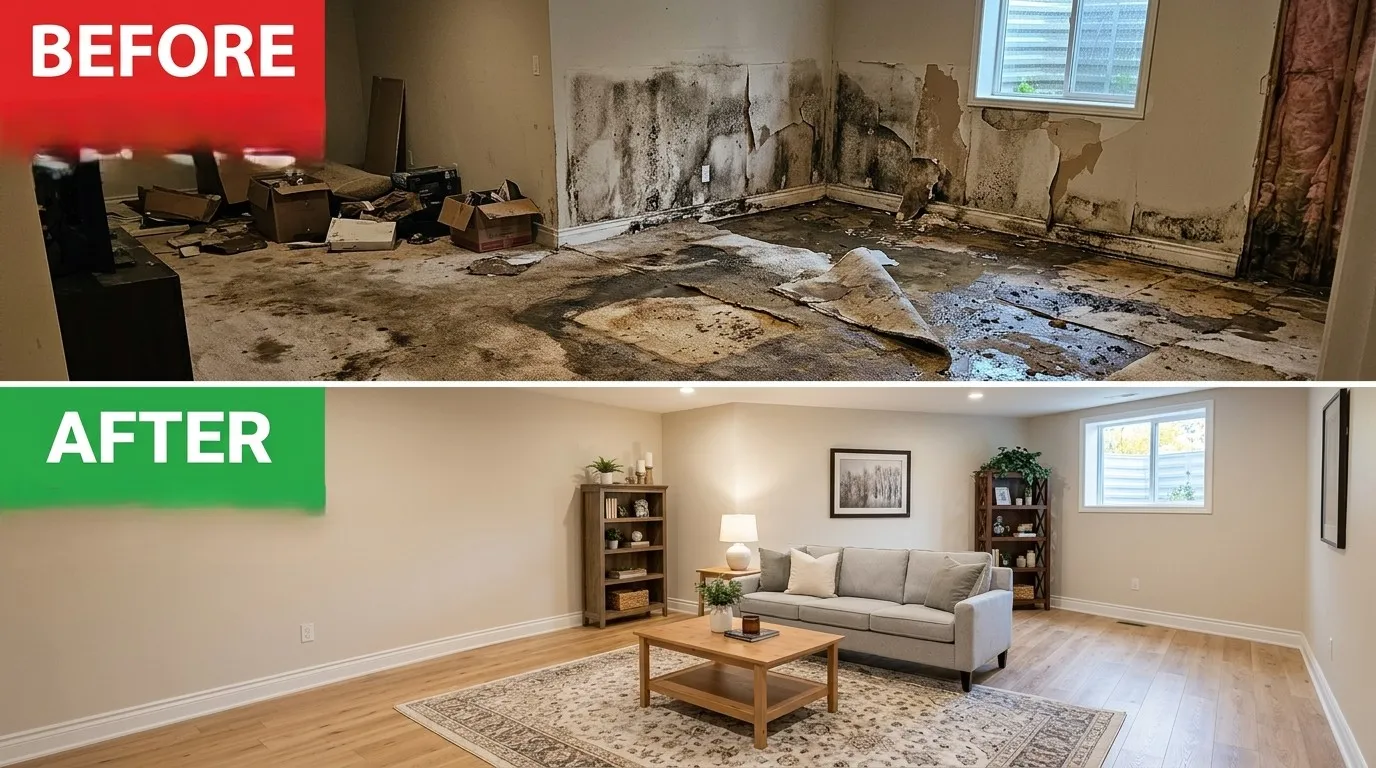
Water damage can make a property feel unmanageable. A homeowner may see wet flooring, a ceiling stain, soaked carpet, or water inside cabinets and wonder whether everything must be removed. A commercial property manager may need to make decisions quickly to protect tenants, inventory, operations, and safety. Professional assessment creates a clearer path forward.
Before Professional Assessment
- Water is actively spreading from a pipe, fixture, appliance, ceiling, or unknown source
- Extent of hidden moisture behind walls, under flooring, or inside cabinets is unclear
- Owner is unsure whether water is clean, drain-related, sewage, or stormwater
- Photos on a phone exist but no organized record of what happened
- Water-damage event is treated as "just a puddle"
After Professional Assessment
- The source is identified or isolated, and the next repair step is defined
- A moisture assessment helps identify affected materials and drying priorities
- The water source is evaluated so the correct safety and cleanup path can be chosen
- Conditions, recommended work, and repair needs are documented clearly
- The property receives a plan covering extraction, moisture, drying, and material recovery
How We Address Water Damage, Moisture, and Plumbing-Related Flooding
A Structured Approach to Extraction, Moisture Assessment, Drying, and Repair Planning
Water damage restoration requires a methodical response. The visible water must be addressed, but so must the possibility of moisture in concealed areas. Center Garland Plumbing focuses on identifying the plumbing source when applicable and helping property owners understand what may be needed to protect affected materials.
Methods and equipment may vary by the conditions, but professional water-damage work can involve:
- Water extraction equipment for accessible standing water
- Moisture meters and related tools to check materials for retained moisture
- Air movement and dehumidification methods appropriate to the affected area
- Containment or separation practices where contaminated water or affected materials require additional precautions
- Plumbing diagnostic equipment for leak detection, drain issues, sewer problems, water-line failures, and slab-leak concerns
- Sewer camera inspection when repeated backups, roots, broken lines, or main-line issues contribute to water damage
- Repair materials and plumbing components for pipes, fittings, valves, water heaters, fixtures, drains, and water lines
- Clear access planning around wet rooms, utility areas, cabinets, walls, and mechanical spaces
The goal is not to use a one-size-fits-all method. The goal is to assess the source, the affected materials, the safety concerns, and the proper path toward drying and repair.
Should You Dry, Repair, or Replace Water-Damaged Materials?
Helping Garland Property Owners Make Practical Recovery Decisions
Not every wet material needs to be removed, and not every material can be reliably saved. The decision depends on the water source, how long materials stayed wet, the type of material, how deeply moisture traveled, whether contamination is involved, and whether the material can be adequately dried and cleaned.
| Scenario | Dry / Repair May Be Possible | Removal / Replacement May Be Recommended |
|---|---|---|
| Clean water on a hard surface caught quickly | Often, after proper extraction and drying | If swelling, delamination, or material failure has occurred |
| Wet carpet from a recent clean-water leak | Sometimes, depending on contamination, padding, time, and drying conditions | If water sat too long, padding is affected, or contamination is present |
| Wet drywall from a small localized leak | Possibly, if conditions allow drying and material remains structurally sound | If drywall is saturated, deteriorated, contaminated, or mold-affected |
| Water inside cabinets | Sometimes, if materials can be dried and remain stable | With particleboard swelling, delamination, or prolonged saturation |
| Sewage-contaminated porous materials | Limited salvage potential | Often requires removal and proper disposal due to contamination concerns |
| Warped laminate or swollen engineered materials | Rarely restored to original condition | Replacement may be more practical |
| Ceiling damage after a leak | Minor repair may be possible after drying and source repair | If sagging, weakened, stained, or structurally compromised |
When Replacement Is More Likely
- Materials are swollen, delaminated, sagging, crumbling, or structurally weakened
- Water was sewage-contaminated or otherwise unsafe
- Moisture cannot be adequately removed from the material
- Damage extends behind cabinets, walls, flooring, or insulation
- The water event has caused odor, deterioration, or recurring moisture problems
- Repair would cost nearly as much as replacement without providing a reliable result
Water Damage Restoration Cost Factors in Garland, TX
Clear Scope Discussions for Water Removal, Drying, Repair, and Reconstruction
Water damage restoration costs vary because no two water events are the same. A small leak caught quickly may require limited plumbing repair and targeted drying. A burst pipe, sewer backup, ceiling collapse, slab leak, or storm-related intrusion can affect multiple rooms, materials, and building systems.
Center Garland Plumbing explains the factors that shape the scope so property owners can understand what they are being asked to approve.
Main Cost Drivers
- The source of the water: clean supply, appliance leak, drain water, sewage, stormwater, or floodwater
- Whether the water source is still active and what plumbing repair is needed
- The amount of standing water and how far it traveled
- The number of rooms, floors, walls, cabinets, ceilings, and contents affected
- Whether carpet, padding, drywall, insulation, flooring, cabinetry, or structural materials need work
- The accessibility of affected spaces, including crawl spaces, ceilings, wall cavities, mechanical rooms, or commercial areas
- The need for emergency, after-hours, weekend, or holiday response
- The duration of drying and monitoring required
- Whether sewage, black water, or another contamination concern is involved
- The extent of reconstruction required after the area is dry and safe for repair
| Service Type | Typical Scope Considerations |
|---|---|
| Emergency water assessment | Source, active leak status, safety conditions, and affected areas |
| Water extraction | Amount of standing water, area size, flooring, carpet, padding, and access |
| Structural drying | Materials affected, moisture levels, equipment needs, and drying duration |
| Plumbing repair | Pipe, fixture, water heater, drain, sewer, water-line, or slab-leak condition |
| Sewer backup cleanup | Contamination level, affected porous materials, sanitation, and source repair |
| Reconstruction planning | Drywall, flooring, trim, cabinetry, paint, ceiling, insulation, and finish repairs |
| Commercial water damage | Property size, occupied spaces, access, tenant coordination, and equipment needs |
Note: An accurate estimate should explain what work addresses the source of the water, what work addresses drying and mitigation, and what work addresses reconstruction. Insurance coverage, deductibles, exclusions, flood policies, and sewer-backup endorsements depend on the individual policy and insurer — not on a contractor's promise.
When Should You Call for Water Damage Help in Garland?
Warning Signs That a Leak, Flood, Backup, or Wet Building Material Needs Attention
You should consider professional water damage assessment when water has entered areas that cannot be fully inspected, dried, or cleaned with ordinary household methods. The concern is not only visible water; it is moisture that may have moved into materials or the possibility that the water is contaminated.
Call for Help When You Notice:
- Water coming through the ceiling or from an upstairs bathroom
- A burst pipe, leaking pipe, or water line that cannot be controlled
- A water heater leaking from the bottom or flooding a garage, closet, or utility room
- A washing-machine hose burst, refrigerator line leak, dishwasher leak, or sink-cabinet flood
- Water under flooring, warm spots, meter movement, or signs of a possible slab leak
- A toilet overflowing onto the floor
- Water coming up through a shower drain, bathtub, toilet, floor drain, or cleanout
- A sewer smell, drain backup, or suspected black-water contamination
- Wet drywall, sagging ceiling material, soaked insulation, or soft baseboards
- Carpet, padding, cabinets, or flooring that remain wet after a leak
- Rainwater entering through a roof, garage, exterior door, wall opening, or drainage path
- A musty smell after water exposure, even if the visible floor seems dry
- A commercial plumbing event affecting customer areas, tenant spaces, or inventory
Water Damage Restoration for Commercial and Multi-Unit Properties in Garland
Protecting Businesses, Tenants, Operations, and Shared Plumbing Systems
Commercial water damage can interrupt operations quickly. A failed water line in an office, a sewer backup in a restaurant, a toilet overflow in a retail property, a water-heater leak in an apartment building, or a broken pipe in a warehouse can create immediate safety, sanitation, property, and scheduling challenges.
Center Garland Plumbing supports commercial plumbing and water-damage-related needs for Garland businesses and property managers. We coordinate with owners, managers, maintenance teams, HOAs, tenants, and facility contacts to identify the source, address urgent plumbing failures, and organize the next response steps.
| Commercial Service Need | Description |
|---|---|
| Emergency leak response | Assessment of burst pipes, active leaks, fixture failures, water-line problems, and water-heater issues |
| Water extraction support | Removal of accessible standing water in affected commercial or multi-unit areas |
| Drain and sewer backup response | Investigation of water backing up through drains, toilets, tubs, floor drains, or cleanouts |
| Sewer camera inspection | Diagnostic review when recurring backups, roots, or damaged sewer lines may be involved |
| Commercial plumbing repair | Repairs related to fixtures, pipes, valves, water lines, drains, sewer lines, and water heaters |
| Multi-unit coordination | Organized communication for apartments, HOAs, offices, retail centers, and managed properties |
| Documentation support | Clear records of observed conditions, recommendations, repair needs, and next steps |
Commercial Properties We Support
- Apartment communities, condominiums, and HOA-managed properties
- Shopping centers, retail stores, and mixed-use buildings
- Office buildings, business parks, and tenant spaces
- Restaurants, cafes, food-service facilities, and hospitality venues
- Schools, churches, community centers, and daycare facilities
- Medical offices, clinics, dental practices, and professional buildings
- Warehouses, industrial facilities, logistics properties, and mechanical spaces
Benefits of Hiring Water Damage Restoration Professionals in Garland
Protect Your Property, Identify Hidden Moisture, and Make Better Repair Decisions
Water damage is often more complex than it looks. A homeowner may remove standing water but still have wet carpet padding, damp drywall, moisture under flooring, or water behind cabinets. A commercial property may appear dry in public areas while utility rooms, walls, or tenant spaces still need attention.
Professional water damage restoration helps property owners:
- Identify and address the water source instead of only treating the symptom
- Remove standing water and reduce the chance of water spreading farther
- Check for moisture in materials that may not be visibly wet
- Determine whether flooring, drywall, carpet, cabinets, insulation, or other materials may be salvageable
- Handle sewage backups and contaminated-water situations with appropriate caution
- Create a clearer record of the incident, affected materials, and recommended work
- Coordinate plumbing repairs with water mitigation and reconstruction needs
- Reduce uncertainty about what should happen before walls or flooring are repaired
- Make more informed decisions about insurance communication, while recognizing coverage depends on the policy
Why DIY Water Cleanup Can Be Risky After a Leak, Sewer Backup, or Flood
Protect Yourself Before You Try to Save the Property
If water is actively spreading, the first priority is safety. Do not assume all water is clean or that every wet area is safe to enter. Electrical hazards, weakened ceilings, sewage contamination, slippery flooring, and hidden structural moisture can create risks that are not obvious at first glance.
Important Safety Guidance
- Do not step into standing water near electrical outlets, appliances, panels, extension cords, or powered equipment
- If water is coming through a ceiling, stay clear of the area because wet drywall can weaken and fall
- Shut off the main water supply only if you can do so safely and know where it is located
- Do not use a standard household vacuum on standing water
- Keep children, pets, customers, and nonessential personnel away from affected areas
- Avoid direct contact with sewage, black water, toilet overflow water containing waste, or drain backup water
- Do not remove wet drywall, insulation, flooring, or contaminated materials without considering safety concerns
- If you smell gas, leave the area, avoid switches or flames, and contact emergency services and the gas utility from a safe location
- If a flood, utility emergency, or public-system issue is suspected, contact the appropriate authority as well as your service provider
If the issue appears to involve Garland's public water or wastewater system, Water Operations is available 24/7/365 for water and wastewater emergency service at 972-205-3210. City line locating applies to water and wastewater mains, not private laterals or private-property lines, so a private plumbing problem may still require professional diagnosis and repair.
Answers to Common Water Damage Questions
Quick, Practical Responses for Garland Homeowners and Property Managers
Water is coming through my ceiling in Garland — what do I do?
Stay away from the affected area if there is an electrical hazard, sagging ceiling material, or active dripping near lights or outlets. If it is safe, stop the water source if you know it is plumbing-related. Move valuables, place containers only where it is safe, take photos, and call for plumbing diagnosis and water-damage assessment. A ceiling leak may come from a pipe, bathroom fixture, water heater, roof opening, HVAC-related issue, or storm intrusion.
Who do I call for water damage from a burst pipe?
Call a plumber or emergency plumbing team to stop the active water source, then arrange water extraction and drying assessment for the affected materials. Center Garland Plumbing can help identify the pipe failure, discuss repair options, and determine what water-damage response may be needed.
My washing machine hose burst and flooded the house. Can the flooring be saved?
It depends on how quickly the water was stopped, how far it traveled, the type of flooring, whether carpet padding or cabinets were affected, and how much moisture remains. Prompt extraction and moisture assessment provide the best information about whether materials can be dried or should be replaced.
There is water under my floor — could it be a slab leak?
It could be. Signs may include unexplained warm spots, a high water bill, a moving water meter when fixtures are off, damp flooring, musty odor, or water appearing without an obvious source. Slab leak detection can help identify the cause before repairs and drying are planned.
My toilet overflowed onto the floor. Is it sewage?
Overflow water can become contaminated, especially when it contains waste or comes from a backup in the drain or sewer system. Limit contact, keep people and pets away, and arrange professional assessment. The source and contamination level affect the cleanup approach.
Water is backing up into my bathtub when I flush. What does that mean?
This can indicate a main drain or sewer-line problem. Do not continue using water fixtures until the cause is checked. Sewer camera inspection, drain clearing, hydro jetting, or sewer-line repair may be needed depending on the condition of the system.
My water heater leaked overnight. Can the floor be saved?
Sometimes. The answer depends on how long the water was present, what flooring was affected, whether water entered cabinets or walls, and whether the materials can be dried effectively. The water heater source should be repaired or replaced before restoration work is finalized.
Rainwater came into my garage after a storm. Is that flood damage?
Water entering from rain, runoff, drainage overflow, or rising water may be treated differently from a sudden plumbing leak. Document the event, check the likely entry point, and review your insurance policy or speak with your insurer for coverage guidance. Garland floodplain areas are primarily associated with Duck Creek, Rowlett Creek, Spring Creek, and tributaries.
How long can wet drywall stay wet before mold grows?
Wet drywall should be addressed quickly because moisture can remain trapped behind finished surfaces. The right action depends on the source of water, how wet the material is, how long it has been affected, and whether contamination is involved. A moisture assessment helps determine whether drying, removal, or repair is appropriate.
Does homeowners insurance cover water damage from a leaking pipe?
Coverage depends on your policy, exclusions, deductible, maintenance history, and the specific cause of damage. Sudden plumbing failures, gradual leaks, sewer backups, stormwater, and rising floodwater can be treated differently. No contractor can guarantee what an insurer will cover.
Does flood insurance cover water damage in Garland?
Flood insurance is typically designed for damage caused by rising water or flooding, while standard property policies often treat sudden indoor plumbing leaks differently. The City of Garland states that standard property insurance policies do not cover flood damage caused by rising water. Review your policy and speak with your insurance agent for property-specific guidance.
Will insurance cover a sewer backup?
It may depend on whether your policy includes water or sewer-backup coverage, along with the source and circumstances of the event. Check your policy language and speak with your insurer. Keep photos, notes, invoices, and repair documentation.
Should I call a plumber or a water restoration company first?
If water is actively leaking, backing up, or overflowing because of plumbing, the source needs to be stopped. A plumber can address the cause; water restoration work addresses the moisture and affected materials left behind. Many situations require both steps.
How long does water damage drying take?
Drying time depends on the water source, materials affected, humidity, air movement, how long the water sat, how deeply moisture traveled, and whether the building can be safely dried in place. A professional assessment is more reliable than assuming a room is dry because the floor surface looks normal.
What should I photograph before cleanup starts?
Photograph the active source if safe, standing water, damaged walls and ceilings, wet flooring, affected belongings, appliance labels if relevant, visible sewer backup, the water path, and any emergency repairs. Keep copies of invoices, estimates, reports, and communication related to the event.
Water Damage Help Built Around Safety, Communication, and Practical Solutions
A Straightforward Path for Garland Property Owners Facing Water Emergencies
Center Garland Plumbing is focused on helping customers move from uncertainty to a clear plan. When water enters a home or business, you deserve straightforward communication about the likely source, immediate safety issues, needed plumbing repairs, water-removal priorities, moisture concerns, and next steps.
We do not make unsupported promises about insurance coverage, material salvage, response times, or the scope of work before assessing the actual situation. Instead, we work to provide an understandable explanation of what is happening, what should be addressed first, and what options may be available.
If a plumbing repair, water extraction, drying plan, drain solution, sewer repair, water-heater repair, or additional restoration step is recommended, the goal is to explain why it is needed and how it relates to protecting the property.
Center Garland Plumbing217 N 10th St, Garland, TX 75040
United States
Plumbing Credentials That Support Water Damage Source Repair
The Right Qualifications Matter When a Leak, Drain, Sewer, or Water Line Causes Damage
Water damage restoration often begins with a plumbing failure. A burst pipe, failed supply line, slab leak, water heater failure, toilet overflow, drain backup, or sewer-line problem may require licensed plumbing expertise to identify and repair the source before drying and restoration decisions are finalized.
Based on the business information provided, Center Garland Plumbing's operating profile includes the following credential categories:
Master Plumber
Highest-level plumbing licensure for complex plumbing-source diagnosis and repair.
Journeyman Plumber
Qualified plumbing professionals for a wide range of plumbing service needs.
Tradesman Plumber-Limited
Credential category supporting specific plumbing scopes.
Plumbing Inspector
Inspection-level knowledge for evaluating plumbing systems and conditions.
Medical Gas Piping Endorsement
Specialized credential for medical gas piping installation requirements.
Related Plumbing Services
Full plumbing coverage from drain cleaning to commercial plumbing.
These credentials relate to plumbing work and plumbing-source repair. Water-damage mitigation, mold assessment, reconstruction, insurance adjustment, and environmental remediation may involve additional credentials, scope limitations, or specialized providers depending on the nature of the incident.
Emergency Water Damage Restoration in Garland, TX
Immediate Help for Burst Pipes, Ceiling Leaks, Flooded Rooms, and Sewer Backups
Water emergencies do not wait for standard business hours. A pipe can break overnight, a water heater can leak while you are away, a toilet can overflow during a holiday gathering, and rain can enter a garage or roof opening during a storm.
Center Garland Plumbing provides 24/7 emergency plumbing and water-damage-related support throughout Garland and nearby areas. When you call, explain what is happening as clearly as possible:
- Is water still actively leaking or flowing?
- Is water coming from a pipe, fixture, water heater, drain, ceiling, appliance, or outside?
- Is the water clean, dirty, or sewage-contaminated?
- Is water near electrical equipment or outlets?
- Is a ceiling sagging or are walls visibly wet?
- Is the problem affecting a home, apartment, business, restaurant, office, warehouse, or multi-unit property?
- Have you already shut off the water safely?
Emergency Response Process
- Immediate phone discussion to understand the urgency and safety concerns
- Guidance on whether to shut off water, avoid an area, document conditions, or contact public emergency resources
- Plumbing-source diagnosis for active leaks, burst pipes, water heaters, toilets, drains, sewer lines, and water lines
- Water removal and drying assessment based on the affected area and water type
- Clear explanation of recommended repairs, mitigation steps, and documentation needs
Emergency Scenarios
- Pipe burst in a wall, ceiling, slab area, garage, or utility room
- Water leaking through the ceiling or from an upstairs bathroom
- Water heater failure or water heater leaking from the bottom
- Washing-machine hose, dishwasher, refrigerator-line, or sink-supply failure
- Toilet overflow or water coming up through drains
- Main sewer-line backup or sewage backup cleanup need
- Rainwater intrusion, garage flooding, roof-related water entry, or stormwater concerns
- Commercial water loss affecting a tenant space, office, restaurant, retail area, or facility
Help Organizing Water Damage Information for Insurance Conversations
Documentation Can Help You Explain What Happened Without Promising Coverage
After water damage, customers often ask, "Will insurance cover this?" The honest answer is that coverage depends on the policy, deductible, exclusions, endorsements, maintenance history, cause of loss, and the insurer's review.
Center Garland Plumbing can help you organize practical information related to the plumbing and water-damage event. This can help you communicate more clearly with an insurance company, adjuster, landlord, property manager, or contractor.
Useful Documentation May Include
- Photos and notes showing the visible source of water, if safely accessible
- Photos of standing water, wet flooring, ceiling damage, drywall damage, damaged contents, and affected rooms
- Plumbing inspection findings and repair recommendations
- Invoices for emergency plumbing repair, water extraction, drying, or related services
- Records of water-heater, pipe, water-line, drain, sewer, fixture, or appliance-related failures
- Moisture assessment records and drying-related observations where applicable
- A timeline of when the loss was discovered, when water was stopped, and what actions were taken
- Copies of communication with property managers, landlords, insurers, or other involved parties
Policy Note
Standard property insurance and flood insurance can treat losses differently. The City of Garland states that standard property insurance policies do not cover flood damage caused by rising water. Water from a burst indoor pipe, sewer backup, appliance failure, storm intrusion, or rising floodwater may be handled differently depending on the policy. Review your policy and consult your insurance agent or insurer for coverage guidance.
Water Damage Repair and Plumbing Warranty Considerations
Understand the Difference Between Plumbing Work, Restoration Work, and Manufacturer Coverage
Warranty coverage depends on the exact work performed, the parts or equipment installed, manufacturer terms, workmanship terms, maintenance requirements, and the written agreement for the project.
For Water-Damage-Related Situations, Separate:
- The warranty, if any, for plumbing repairs such as pipe repairs, valves, fixtures, water heaters, water lines, drains, or sewer components
- Manufacturer warranties for new equipment or replacement parts
- Workmanship terms associated with qualifying installation or repair work
- Restoration, drying, cleaning, demolition, reconstruction, painting, flooring, cabinetry, or other separate scopes
- Insurance coverage, which is not a warranty and depends on the policy
| Coverage Type | What It May Apply To |
|---|---|
| Plumbing Workmanship | Qualifying repair or installation labor, subject to written terms |
| Replacement Parts / Units | Manufacturer coverage for eligible products, subject to manufacturer requirements |
| Water Heaters and Equipment | Manufacturer warranty terms, registration requirements, installation conditions, and maintenance terms |
| Documentation | Service records, invoices, inspection notes, and repair details that help clarify work completed |
| Restoration / Reconstruction | Specific terms only if such work is included under a written scope or agreement |
Important Note: Ask for written warranty information for the specific repair or replacement work you approve. Water damage caused by a future unrelated event, stormwater, flooding, misuse, lack of maintenance, or another plumbing failure may not be covered by a prior repair warranty.
10 Fully Equipped Service Vehicles Supporting Garland Water Damage Calls
Tools, Parts, and Plumbing Diagnostic Equipment for Urgent Property Problems
Based on the provided business information, Center Garland Plumbing operates with 10 fully equipped service vans and a team of 50 skilled professionals. Service vehicles help support emergency calls involving active plumbing leaks, water-line issues, drain backups, sewer concerns, fixture failures, water-heater problems, and other urgent situations.
Fleet readiness helps the team bring appropriate plumbing tools, diagnostic equipment, common repair materials, and service resources to the property. The exact equipment needed for water extraction, structural drying, sanitation, sewer diagnosis, pipe repair, or reconstruction depends on the specific conditions at the site.
Diagnostic Tools
Plumbing diagnostic tools for leak, drain, sewer, fixture, and water-line concerns.
Repair Materials
Common pipe, fitting, valve, fixture, and water-heater repair materials on board.
Drain & Sewer Resources
Drain-cleaning and sewer-diagnostic resources when backups contribute to water damage.
Water Extraction Support
Service coordination for water extraction, moisture assessment, and drying planning.
Emergency Dispatch
Emergency dispatch support across Garland and nearby North Texas communities.
Repair Coordination
Coordination between source repair, water removal, drying, and reconstruction planning.
Payment Planning for Large Water Damage and Plumbing Projects
Understand the Scope Before You Commit to Major Work
A water-damage event can involve more than one expense. There may be an emergency plumbing repair, water extraction, drying work, material removal, reconstruction, flooring replacement, drywall repair, cabinet work, or water-heater replacement. For commercial properties, the scope may also involve tenant coordination, after-hours access, phased work, and operational planning.
Before Approving Major Work, Ask for a Clear Explanation Of:
- The urgent work required to stop the source and protect the property
- The recommended water mitigation and drying work
- The work that may be needed after drying, such as drywall, flooring, trim, paint, cabinet, or ceiling repairs
- Which costs may be handled through insurance, out-of-pocket payment, property-management processes, or other arrangements
- Whether payment or financing options are available for qualifying plumbing repairs or replacement projects
- The terms, timeline, qualifications, and total cost of any financing option before agreeing
Financing availability, approval, rates, repayment terms, and eligible services should be confirmed directly with Center Garland Plumbing before work begins.
Center Garland Plumbing Service Recognition
A Long-Term Focus on Reliable Plumbing and Customer Support
Based on the business details provided, Center Garland Plumbing has associated its service profile with the following recognition categories:
Plumbing Contractor of the Year
Recognition category for established plumbing contractors in the service area.
Super Service Award
Service-focused recognition for consistent customer-facing performance.
BBB Torch Award for Ethics
Better Business Bureau recognition category for business ethics.
Best Plumber / Best of the Best
Local best-plumber-category recognition for plumbing service providers.
Community Impact Award
Distinguished service recognition related to community engagement.
Service Integrity
Focus on clear communication, honest scope discussions, and dependable follow-through.
Water-damage customers should evaluate any provider based on the practical facts that matter during an emergency: clear communication, the ability to identify the water source, appropriate safety guidance, documentation, transparent scope discussions, and repair coordination. Awards, ratings, and recognition claims should always be reviewed in the context of the actual service offered, the current credentials of the provider, written estimates, and the needs of the specific property.
Senior and Military Discounts for Qualifying Plumbing Services
Support for Eligible Garland Customers
Center Garland Plumbing recognizes that unexpected plumbing and water-damage situations can place pressure on household and property budgets. Based on the provided business information, special discounts may be available for senior citizens, military members, and veterans on qualifying plumbing services.
Potential Qualifying Offers May Include
- Senior customer discounts on select plumbing or service visits
- Military and veteran discounts for eligible plumbing work
- Seasonal specials for qualifying drain, water-heater, water-filtration, or repair services
- Promotional offers related to drain clearing, camera inspections, slab-leak repair, or water-heater maintenance
Discount availability, service eligibility, exclusions, emergency applicability, and current terms should be confirmed before scheduling or approving work.
Water Damage Restoration and Emergency Plumbing Hours in Garland
24/7 Availability for Urgent Leaks, Backups, and Water Damage Situations
Water emergencies can happen early in the morning, late at night, on weekends, or during severe weather. Center Garland Plumbing states that emergency plumbing services are available 24 hours a day, seven days a week for urgent water-related problems in Garland and surrounding North Texas communities.
| Day | Emergency Service Hours |
|---|---|
| Monday | 00:00 – 23:59 (24 Hours) |
| Tuesday | 00:00 – 23:59 (24 Hours) |
| Wednesday | 00:00 – 23:59 (24 Hours) |
| Thursday | 00:00 – 23:59 (24 Hours) |
| Friday | 00:00 – 23:59 (24 Hours) |
| Saturday | 00:00 – 23:59 (24 Hours) |
| Sunday | 00:00 – 23:59 (24 Hours) |
Phone: +1 (945) 387-1123
Email: centergarlandplumbing@gmail.com
Website: emergencyplumbergarlandtx.com
For a public water or wastewater emergency involving Garland utility infrastructure, the City of Garland lists Water Operations at 972-205-3210, available 24/7/365.
How to Choose Water Damage Restoration Help in Garland
Questions That Help You Compare Water Cleanup, Drying, and Plumbing Providers
The best provider for a water emergency is not always the company with the loudest advertisement or the fastest-sounding promise. When water is inside a home or business, ask practical questions that help you understand the service scope, safety plan, source repair, and documentation process.
| Question to Ask | Why It Matters |
|---|---|
| Can you help identify and stop the water source? | Drying work is less effective if an active pipe, drain, fixture, water heater, or sewer problem continues |
| Do you distinguish between clean water, drain water, sewage, and stormwater? | The water source affects safety practices, cleaning needs, and material decisions |
| How will you check for hidden moisture? | Water can remain behind walls, under flooring, and inside cabinets after visible water is removed |
| Will you explain the difference between plumbing repair, mitigation, and reconstruction? | Clear scope separation helps avoid confusion about what each phase is meant to accomplish |
| What documentation will I receive? | Photos, findings, invoices, and records can help with insurance or management communications |
| Can you handle related plumbing repairs? | Water damage from pipes, water heaters, drains, sewer lines, fixtures, or slab leaks often needs source repair |
| How do you handle sewage backup or contaminated water? | Sewer-related water requires heightened safety and cleanup considerations |
| Will you explain pricing before major work begins? | Clear scope and cost communication help customers make informed choices |
| Are you available for emergency calls? | After-hours water events may require immediate guidance and action |
| Do you serve my property type? | Homes, apartments, HOAs, restaurants, offices, and warehouses may have different needs |
Center Garland Plumbing combines plumbing-source investigation with water-damage-related service planning, helping Garland customers move from "water is everywhere" to a more organized recovery path.
Contact Center Garland Plumbing for Water Damage Restoration in Garland, TX
Speak With a Water-Damage and Emergency Plumbing Professional Today
Contact Center Garland Plumbing
If you are dealing with water on the floor, a ceiling leak, soaked carpet, wet drywall, a burst pipe, a water heater leak, a toilet overflow, water backing up in a tub, sewer odor, a suspected slab leak, or rainwater coming into the property, do not wait for the problem to become harder to manage.
Center Garland Plumbing is ready to help homeowners, landlords, property managers, businesses, HOAs, and commercial facilities understand what is happening and what should happen next.
(945) 387-1123
centergarlandplumbing@gmail.com
217 N 10th St
Garland, TX 75040
24/7/365 — Always Open for Emergencies
Water Damage Restoration
Protect your home, business, belongings, and next repair steps with dependable water damage restoration Garland TX property owners can call when water enters the building.